


AI Agent Development

February 18, 2026

4 min read
Most operations don’t break because people aren’t working hard. They break because work is scattered across too many tools, too many handovers, and too many “small decisions” that can’t be captured in if-then rules.
You can automate the straightforward steps. But the moment a workflow becomes multi-stage, exception-heavy, or dependent on context, automation quietly hands it back to humans:
That’s not a tooling problem. It’s a workflow problem. And it’s exactly where AI agents are starting to make a real difference.
AI assistants (copilots, chatbots) are great at self-contained tasks: summarising, drafting, answering questions, generating content. Useful but they still require someone to run the workflow end to end. AI agents go further. They’re designed to operate inside a digital environment, reason across inputs, use tools (APIs, databases, ticketing systems), and execute multi-step work until an outcome is reached within clear boundaries.
In plain terms: assistants support work, agents move work forward.
This guide is for the messy middle of operations, the part most automation can’t reach:
When these workflows stay manual, the symptoms are familiar: long cycle times, recurring backlogs, inconsistent execution, and a growing reliance on “the one person who knows how it works.”
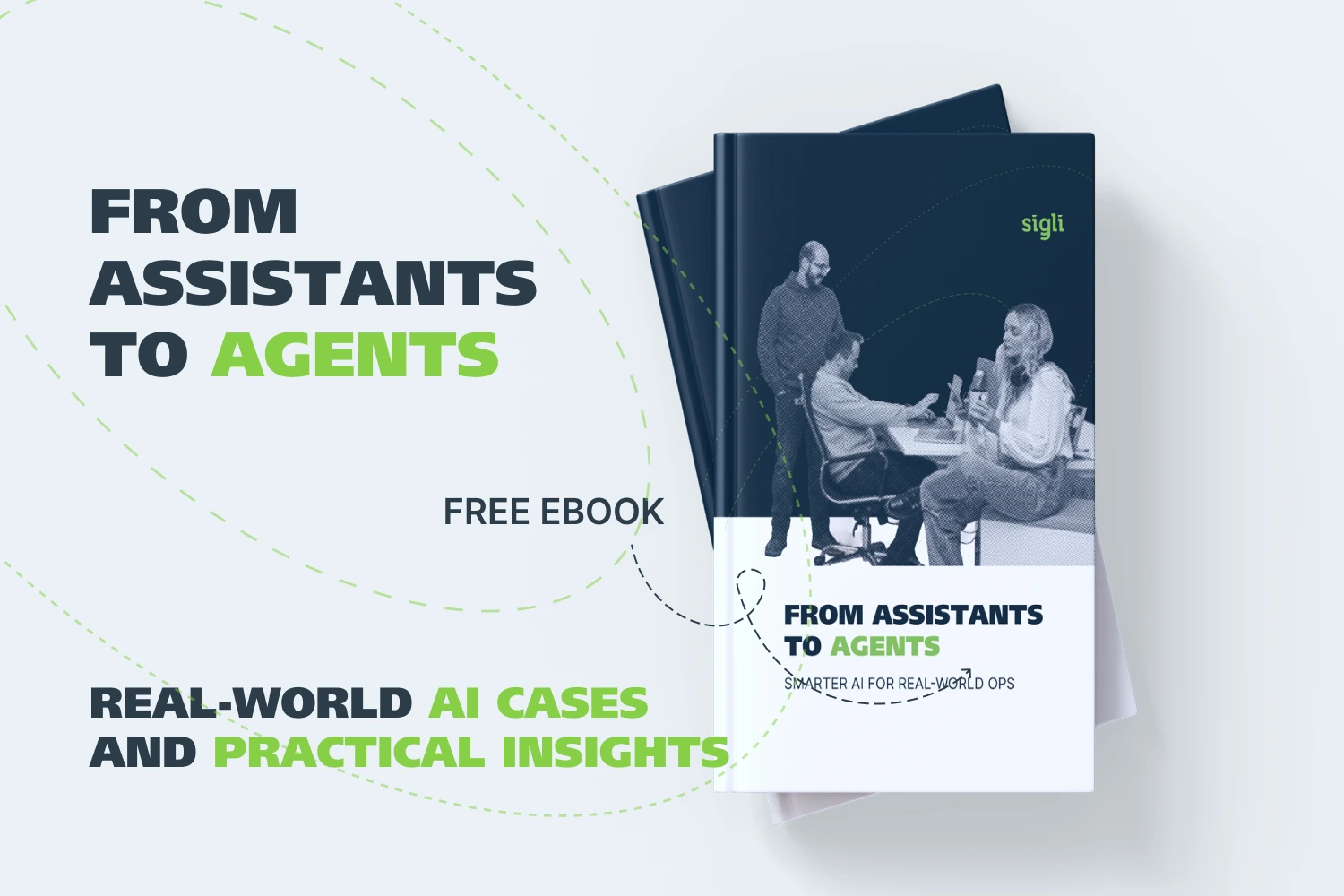
From Assistants to Agents: Smarter AI for Real-World Ops is built to help teams move from vague interest to concrete action.
Inside, you’ll find:
Get a practical view of what’s possible now, what tends to fail, and how to build toward outcomes safely.
If you’re exploring how to reduce operational effort without creating new risk, this guide will give you a strong starting point.
👉 Download Sigli’s free AI agent guide here: From Assistants to Agents: Smarter AI for Real-World Ops



.svg)
.svg)
.svg)
.svg)


.svg)

.svg)
.svg)
.svg)
.svg)
.svg)
.webp)


.webp)


.webp)


.webp)