


Digital Transformation

December 8, 2025

10 min read
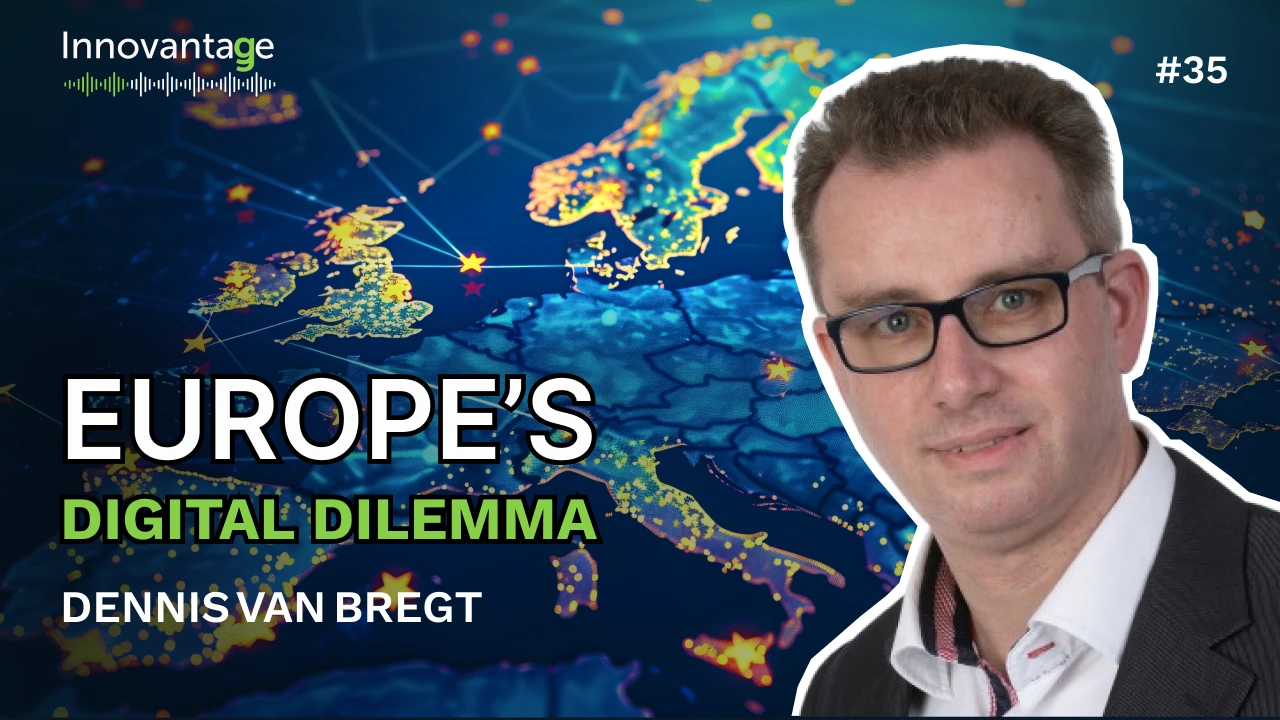
Today, data has become one of the most valuable assets. Organizations that can effectively manage, analyze, and apply their data (often with the help of artificial intelligence) gain a significant competitive advantage. But with new opportunities come new responsibilities and risks. How is data-driven thinking transforming organizations? Why do so many companies still misuse AI? And how can businesses prepare their employees for a future powered by automation and analytics? That’s what this episode of the Innovantage podcast, hosted by Sigli’s CBDO Max Golikov, explores.
To talk about these topics, Max invited Dennis van Bregt, Head of Data Analytics & AI at Allnex, a global leader in materials science.
Dennis’s work at Allnex centers on three main areas: data, analytics, and AI. His team ensures that core data related to customers, suppliers, and materials is efficiently managed and accessible. They develop and maintain a robust data platform designed to support analytics and reporting.
The analytics function translates data into actionable insights. While traditionally linked to SAP and Business Objects, Allnex is now transitioning to Power BI to leverage the new data platform for more flexible and scalable reporting.
Dennis also drives the company’s adoption of AI and machine learning to enhance operational efficiency.
With a background in econometrics (which is today’s equivalent of data science), Dennis brings over 30 years of experience in the field. Despite major advances in tools and technology, he notes that the fundamentals remain the same: roughly 80% of the work still revolves around collecting and preparing data.
The volume and complexity of data have grown exponentially. Apart from this, we can observe the introduction of stricter privacy and security requirements.
In recent years, the world of data has experienced a dramatic evolution with the rise of large language models (LLMs). For more than two decades, unstructured data (like PDFs, presentations, and meeting transcripts) had to be manually converted into structured tables before it could be analyzed. This was a very time-consuming process, which limited the volume of an organization’s knowledge that could be used effectively.
Over the past five years, the emergence of LLMs has changed that. These models can interpret meaning directly from unstructured data. They can extract context without the need for manual structuring.
One of the key challenges for companies now is knowledge retention. A significant portion of the experienced workforce will retire within the next decade and take years of expertise with them.
To preserve that knowledge, Dennis’s team is exploring how AI can process materials such as work instructions, technical documents, and meeting transcripts and automatically summarize insights.
But despite these advancements, Dennis emphasized that AI is not a magic wand. Effective use of AI still depends on solid data foundations and literacy across the organization, and that’s exactly what his team is focused on today.
At Allnex, Dennis is currently leading the rollout of a company-wide data literacy program. It is designed to help employees understand the impact of data on their work and their own influence on the organization’s data ecosystem.
The program aims to make data and AI more accessible and relevant to each role. For example, operators will gain insights that make daily work easier. Thanks to this, they will be able to concentrate on exceptions instead of checking every detail manually. As AI technologies develop and become more powerful, they are expected to function more like virtual assistants. They can identify patterns and correlations that humans might miss due to the enormous volume of data.
Employees should also understand their responsibility in creating data. Every person continuously generates data through daily activities, like system entries or virtual meetings. This data should be clear, accurate, and usable for others across the company.
Although Allnex operates with standardized global systems, its 33 factories and 22 R&D centers sometimes interpret data fields differently. This can create challenges when it comes to expanding analytics or AI use cases across sites. The data literacy initiative highlights the importance of shared understanding and data integrity across all operations.
Apart from this, it's crucial to explain to employees the specificity of the key regulations, such as the EU AI Act and GDPR, teach them how to handle personal identifiable information responsibly, and how to leverage aggregated data for insights.
Concerns regarding the replacement of human employees with AI tools have been widely discussed for a couple of years already. However, Dennis believes that AI is not a threat to all jobs. Automation can increase productivity. But human oversight remains essential in many processes. AI is intended to augment human work, while employees can focus on higher-value tasks.
The significant role of AI for businesses is undeniable. As mentioned above, AI provides a valuable tool for preserving knowledge and maintaining operational continuity. Moreover, it enables faster, more flexible learning. Unstructured data can be transformed into interactive training materials so that employees can learn at their own pace through AR/VR applications.
AI models are good at processing massive amounts of information and identifying patterns. Thanks to this, AI can support decision-making and even assist with some core business processes, like strategy development (when guided by humans).
However, it still can’t independently replace domain expertise or generate a competitive advantage without context-specific input.
Without any doubt, the mass adoption of new tools in workplaces requires new knowledge and behaviors from their potential users. Nevertheless, the AI skills needed nowadays depend on the role and goals of the user. For employees focused on analytics or data mining, foundational programming knowledge in languages like Python remains valuable. Even though AI can now automate certain aspects of coding, understanding these languages helps professionals grasp how data processes connect and function.
For marketing, content creation, or multimedia roles, proficiency in prompt engineering is increasingly important. It is vital to know how to create precise prompts. This will allow you to generate high-quality outputs from AI tools.
According to Dennis, one of the biggest risks of using generative AI at work is the unintentional leakage of confidential information. Many employees already experiment with ChatGPT. But quite often, they are unaware that inputting proprietary data into public models can expose corporate secrets. To prevent this, Allnex has built a secure, internal version of ChatGPT on Azure that offers the same functionality without external connections.
However, simply blocking access to public tools is not a solution. When employees are restricted, they often find ways to work around these restrictions. For example, they may start emailing sensitive files to private accounts to use ChatGPT at home. This can create even more data-leak risks. And here is when AI literacy enters the game again. It is vital to explain the dangers to people, show real-world examples (like Samsung’s leaked source code incident), and offer safe internal alternatives.
Apart from this, tool adoption remains a major challenge. Many companies quickly adopt new AI tools without fully understanding their true needs or adequately preparing employees for the change. As Dennis emphasized, success depends not only on technology but also on aspects such as training and continuous improvement. New tools can shift roles and responsibilities. That’s why organizations should prioritize and invest in upskilling as well.
For Dennis, role-based access control is a cornerstone of responsible data management. Every organization should ensure that its employees have access only to the data that is relevant to their work. Such efforts protect sensitive information and allow organizations to tailor AI literacy programs to specific audiences. Those people who handle proprietary or personal data require deeper understanding of GDPR and confidentiality. At the same time, others benefit from simpler guidance focused on general awareness.
But even with the right approaches to corporate education, a lot of businesses can face difficulties in proper communication with their team members. For instance, Allnex employs people across 50 countries. Their ages range from 17 to 70, and all of them have different levels of English and digital fluency. To reach everyone effectively, his team uses multiple communication channels, including newsletters, webinars, and internal podcasts. These initiatives translate complex topics, such as the EU AI Act, into clear language for everyone.
Nevertheless, Dennis mentioned another serious issue. Employees spend less time consuming educational content than the team spends creating it. That’s why organisations should do their best to make materials more engaging and accessible for different groups based on their needs.
Different demographics consume information differently. Younger employees respond better to short, social-style formats such as TikTok-style teasers that drive interest toward deeper materials. Older audiences often prefer traditional written guides or webinars. For a big team, mixing different formats remains key.
Dennis and his team are continuously experimenting with new ways to communicate AI and data literacy across a global workforce. After discovering that very few employees watched long explainer videos, the team restructured learning into shorter, modular clips. Now, the materials are broken into three- to five-minute clips, which have subtitles in over 30 languages. To save time and ensure consistency, Dennis even used AI voice cloning for narration and text-to-speech tools that can mimic his tone.
Experimentation extends to written materials as well. Policy documents are now repurposed into conversational audio formats with advanced tools like Google’s NotebookLM. They help turn static text into AI-generated dialogue podcasts.
In his conversation with Max, Dennis explained that data and storytelling share a common foundation. They can be viewed as art forms. It doesn't matter whether you are designing a dashboard or producing a video, success depends on capturing attention and conveying a clear message.
In analytics, the huge volume of data that is available today can easily overwhelm people. A well-designed dashboard should do more than display numbers. It should turn data into information and information into insight. The visuals should tell a story that makes sense in context.
The same creative principles can be applied to communication. Even educational business podcasts and videos can mix professionalism with a touch of humor. This makes content more natural and engaging.
Dennis expects a workplace to be transformed by technological social responsibility. In his Vision video, he explores what companies might look like fifteen years from now.
The video imagines an ordinary workday in 2040: employees commute in self-driving cars, navigate offices using augmented-reality glasses, and enter meetings preconfigured by AI-powered assistants. Even small details, like the coffee being ready upon arrival, make the future more relatable.
According to Dennis, the future of work is already taking shape, and society must adapt thoughtfully. The upcoming shifts can be compared with the impact of the industrial revolutions. Productivity gains historically led to shorter workweeks (from six days to five), and the next evolution may be a 32-hour workweek. However, technological progress must not come at the cost of massive unemployment or widening inequality.
In a good scenario, we will build a society where productivity and prosperity are shared. In such a society, people contribute through their passions and strengths, not just necessity.
In his predictions, Dennis also pointed to the growing influence of AI on entry-level jobs. As he explained, automation often impacts the youngest generations first. While many young people want to become influencers today, an economy can’t sustain millions of content creators without a foundation of real production and services. To prevent this imbalance, governments and institutions must guide AI adoption responsibly.
Europe should play a unique role in this transition. The EU’s GDPR and the AI Act set a global standard for responsible data and technology use. However, the region needs to find the right balance between regulation and innovation.
Dennis views artificial intelligence as a dual force. It can bring great progress, but can also cause harm if misused. The growing strength of open communities such as GitHub, Hugging Face, and others plays a crucial role in maintaining balance and transparency.
AI is not limited to language models. It includes a broad spectrum of technologies, like computer vision, image recognition, and advanced analytics. The real value lies in how these systems interact. The rapid pace of innovation that we can observe today signals a bright and promising future.
Nevertheless, there are also some risks. As technology simplifies mental tasks, people can become intellectually passive. Studies show reduced brain activity when people use generative tools. That's why AI literacy and conscious engagement are essential.
Dennis stressed the importance of maintaining critical thinking and empathy. For him, responsible AI begins with human awareness. People should be ready to question assumptions and test ideas, despite the fact that AI can provide them with ready-to-use insights.
Overall, Dennis remains optimistic about the future. He is ready to explore new developments but stays critical because he strongly believes that we should embrace any innovation responsibly.
Want to explore more insights about the future from tech experts and business leaders? Don't miss the next episodes of the Innovantage podcast hosted by Max Golikov!
Digital literacy for employees is the ability to use digital tools, data, and AI safely and effectively at work. It covers understanding how data is created, stored, and analysed, how AI systems work in broad terms, and how to use them responsibly in daily tasks.
Because most business processes are becoming data- and AI-driven. Employees who understand digital tools can work faster, make better decisions, and collaborate more smoothly with AI systems instead of being replaced or sidelined by them.
AI will automate parts of many jobs, but it still needs human oversight, domain expertise, and context. Employees with strong digital literacy are more likely to have their roles augmented by AI and move to higher-value tasks, rather than being fully replaced.
It depends how it’s used. Putting confidential information into public tools can cause data leaks. More mature organisations provide secure, internal versions of ChatGPT or similar models, plus clear guidelines and training so employees know what they can and can’t share.
Digital literacy is the umbrella. Data literacy focuses on understanding and using data; AI literacy focuses on how AI systems work and their limitations. Together, they form the skill set employees need to work confidently and responsibly in a modern, AI-enabled organisation.



.svg)
.svg)
.svg)
.svg)


.svg)

.svg)
.svg)
.svg)
.svg)
.svg)
.webp)


.webp)


