Business Strategy & Growth

January 26, 2026

12 min read
There isn’t a one-size-fits-all approach to building a startup amid rapid advances in AI and increasing competition in the business environment. Every project has its own approach and unique story of success. However, it is always crucial to draw on the experience of other businesses when shaping your own unique strategy.
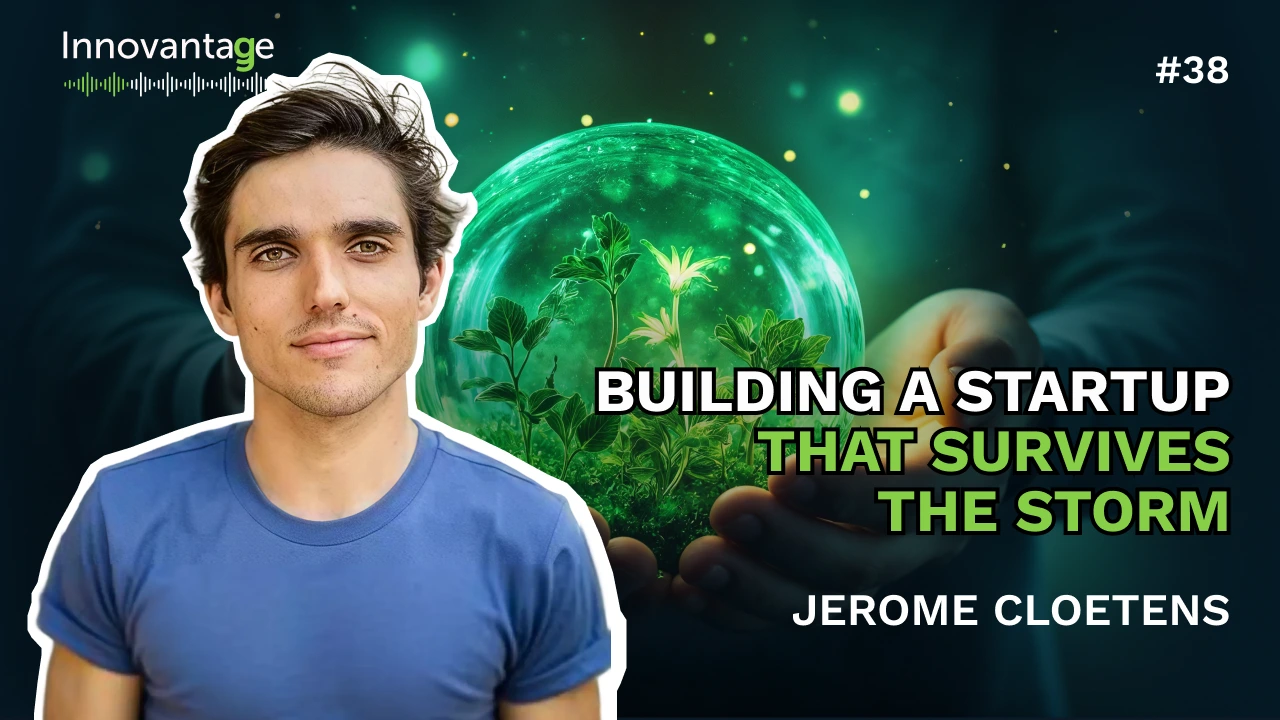
In the latest episode of the Innovantage podcast, its host and Sigli’s CBDO, Max Golikov, speaks with Jerome Cloetens, co-founder and CEO of Palau, about what it takes to survive and grow today.
Palau operates in the area of ESG and sustainability reporting, where regulation and enterprise expectations evolve faster than most early-stage companies can adapt.
Jerome also shared his vision of the trade-offs between bootstrapping and fundraising, the discipline required to sell to enterprises, and why enterprise sales can become a strong competitive edge for a startup.
The Palau project was built to solve a problem that closely mirrors financial reporting, but in the domain of climate and sustainability. Large corporations today face growing pressure from banks, investors, and regulators to be fully transparent about their environmental impact.
Palau addresses this challenge with an AI-driven reporting platform. The system helps companies collect sustainability data, standardize it, and transform it into the specific formats required by regulators and investors. As a result, it helps reduce manual work and turn complex ESG data into structured reports.
Climate and sustainability have lost political momentum in the US following recent regulatory shifts. However, global demand continues to rise. Europe, Asia, Brazil, and parts of the US, such as California, are introducing stricter reporting requirements. As many San Francisco-based startups pivot away from climate-focused solutions, Palau has the possibility to benefit from a temporary competitive window.
Palau was founded by a four-person team. One co-founder was Jerome’s cousin. Another founder, who is now the CTO, brought deep technical expertise and built the core platform. The fourth person has experience in working directly with complex sustainability compliance requirements at a large European firm. Thanks to this, she can contribute regulatory and domain expertise. The initial version of the product was built to solve real problems that she faced in her role.
As for the right timing for the project, Jerome believes that it is more about execution, not about perfect conditions only.
The team adopted a fast-moving approach. They launched small experiments, tested ideas quickly, and relied heavily on market feedback.
Jerome initially chose to bootstrap Palau. This allowed the team to experiment efficiently during the first year and, at the same time, maintain tight focus and cost discipline.
The strategy shifted once Palau reached 15 to 20 enterprise clients, including companies generating more than $300 million in annual revenue. At that point, speed became a constraint. Hiring engineers purely from operating cash flow was possible but slow. This increased the risk of losing momentum in a fast-moving AI market.
External capital provided a financial buffer and enabled faster execution without abandoning a lean operating mindset.
Today, engineering remains the company’s core investment. There is no dedicated marketing or sales team yet. Jerome personally handled the first 20 customers and plans to onboard up to 100 before scaling sales. According to him, maintaining direct relationships with customers at early stages is crucial as it helps understand their needs and shape the product.
Jerome views AI as a powerful accelerator for engineering. But it is still not a replacement for human expertise (at least at the current moment). Lower-level tasks are increasingly supported by AI tools. However, core engineering work requires experienced developers.
At the same time, in his conversation with Max, he highlighted the advantage of small, focused teams. Even without AI, lean teams can outperform larger organizations as they move faster and make clearer decisions. AI strengthens this dynamic by allowing teams to stay small while increasing output.
Looking back, Jerome would largely follow the same path. As he was a first-time founder, mistakes were inevitable. But starting with a single, real customer proved to be the right approach.
The team built a focused solution for one enterprise where a co-founder worked. It means that the product already solved a real-life problem before attempting to scale. That initial success created a repeatable foundation for acquiring additional customers. And it’s much more efficient than raising capital around an untested idea.
The early strategy was simple: talk to customers and build a product. There was no emphasis on pitch decks or long-term forecasts. Daily work revolved around customer calls and shipping code. This approach accelerated learning and product-market fit.
Financial control was another lasting lesson. Bootstrapping forced strict visibility into the runway and recurring revenue. Even now, after raising external capital, that mindset remains at Palau.
Enterprise sales are typically slow and complex, as such businesses are often resistant to change. Decision cycles are long, while stakeholders are fragmented. Moreover, new vendors often face high credibility barriers. Despite this, Palau set an ambitious target of serving 300 enterprise clients by the end of 2026.
The core insight was a widespread knowledge gap. Most large companies were facing climate and sustainability reporting requirements for the first time. They had limited internal expertise around risk assessments, transition planning, and regulatory disclosure. Instead of leading with a product pitch, the Palau team first built a practitioner community where in-house sustainability leaders and consultants could exchange knowledge and learn from one another.
That community became a trust engine and a distribution channel.
The role of partner and community reputation in accelerating enterprise sales can’t be underestimated. Without established reputations, closing a single client can take six months of meetings, pilots, and internal approvals. With community partners who have worked with these companies for years, Palau can reduce that timeline to just a week.
The community exists first as a learning environment, not a sales funnel. One of the key goals of its creation was to show sustainability teams that with automation, they can work faster and take on more ambitious initiatives. This bottom-up approach contrasts with the dominant top-down enterprise sales model. But it has proven more effective in building trust within complex organizations.
Enterprise adoption is typically preceded by a 30-day pilot. During this period, the team gathers rapid feedback, iterates quickly, and adjusts direction where needed. Community members are not always direct buyers. But their sustained participation builds familiarity and credibility, and, as a result, makes future enterprise conversations significantly easier to initiate.
Direct feedback from early users led to meaningful changes in product scope and positioning. The team initially targeted smaller companies but quickly identified a larger need among enterprises that generate $200 million to $300 million in annual revenue. These organizations faced the highest regulatory and investor pressure. That’s why they require more robust reporting capabilities and governance controls.
Initially, the Palau company lacked the full enterprise-grade IT security and compliance frameworks expected by large corporations. Early sales cycles were slow due to security reviews and risk assessments. Nevertheless, this situation demonstrated the necessity of investment in cybersecurity and access controls to meet standard enterprise requirements.
Meanwhile, sustainability reporting remains highly customized, as each enterprise interprets regulatory and stakeholder demands differently. That’s why flexibility is a must.
As Jerome explained, early attempts to scale across industries highlighted a structural challenge. A single team couldn’t hold deep domain expertise for every regional and sector-specific regulatory regime. Instead of building all AI workflows internally, Jerome’s team introduced a protocol that allows external experts to design their own AI-driven workflows with a set of provided tools and frameworks.
This approach enabled rapid expansion into different markets, where local consulting partners with established credibility could tailor solutions for various industries, such as the pharmaceuticals. The same model now supports clients across semiconductors, manufacturing, construction, and other sectors, and reduces dependence on a single vertical.
The platform has reshaped how consulting partners and enterprises handle sustainability reporting. Manual, low-level tasks (document review, gap assessments, data validation, etc.) are now largely automated. As a result, human experts can focus on higher-value, strategic work. This shift greatly supports highly ambitious project scopes.
AI plays a central role as it can process vast amounts of regulatory and corporate documents, identify compliance gaps, and flag issues for expert review. Consultants then need to verify the AI’s output, while subject-matter experts provide final recommendations.
Non-financial data (climate, water usage, social metrics, etc.) is becoming increasingly critical for enterprise decision-making. Financial reports guide planning and forecasting. Meanwhile, structured environmental and social data allows companies, insurers, and investors to assess risks and make informed strategic choices.
For instance, large corporations like Nike already provide transparent reporting on carbon footprints and resource consumption. This information enables stakeholders to evaluate impact and identify gaps. Governments and pension funds can use these datasets to screen partners and make policy decisions more quickly.
Right now, this standardized non-financial data may seem to be a niche sustainability concern. But in the future, it will transform into a core tool for financial and operational decision-making.
Jerome noted that sustainability is not about certificates, activism, or greenwashing. It is backed by the idea of making data-driven decisions that respect planetary boundaries and, at the same time, allow running a profitable business. The real goal is to integrate non-financial data into everyday enterprise decision-making and ensure compliance, risk management, and operational efficiency.
Here, the balance is important. Sustainability should not compromise business growth.
For Jerome, success isn’t measured by the number of clients onboarded superficially. As he explained, it’s much more important to have companies that actively use the platform to advance their sustainability transition. Many organizations start with compliance just to check boxes to satisfy stakeholders. But the real value emerges when enterprises leverage the data to drive meaningful change and uncover business opportunities.
The platform focuses on supporting companies willing to take action. It helps them track progress toward long-term targets such as Europe’s 90% emissions reduction goal over the next two decades.
European climate regulations are evolving, but clarity remains a key challenge. Companies often want to comply voluntarily. But they need to keep processes lean and transparent and avoid bureaucratic hurdles. California’s climate laws are a good example of how localized enforcement can outpace federal action.
Many guidelines in Europe are unclear and written in legalistic formats. As a result, companies need to invest significant effort just to understand compliance requirements. Palau addresses this issue by using AI to rephrase regulatory text into readable, actionable guidance.
The Palau team also encourages regulators to join its community, learn from its members, share feedback, and iterate on guidelines.
Though Palau is growing quickly today, its journey was not without pitfalls. January of 2025 was the most difficult period for the team. A sudden regulatory change disrupted their prior business model, and a loan repayment left the startup deeply in the red.
The team faced low morale. The market shift compounded the pressure.
To survive, they quickly pivoted to a protocol-driven approach that empowered experts to manage AI workflows. Intensive work over six weeks helped secure new clients and stabilize cash flow, which brought the company to a positive financial position.
Daily engagement with prospects and clients provides ongoing encouragement. AI tools capture key insights from client interactions. This information allows the founders to see the product’s real-world impact. Securing deals with large, bureaucratic enterprises is challenging. However, it offers a unique sense of accomplishment that fuels continued momentum.
Palau’s largest client generates around $10 billion annually and proposed a five-year contract. Jerome resisted signing long-term deals in the first year, as the product is expected to improve significantly over the next few years. At the moment, he views such contracts as premature. The solution should evolve before committing to extended agreements.
According to Jerome, AI will reshape how startups are built and how software is used. While we still can observe the hype cycles and risky bets in the space, the overall trajectory is unstoppable. Ignoring the speed and momentum of AI progress, especially agent-based systems, is a strategic mistake.
For startups that rely on third-party AI models instead of owning them, the risk of being replaced is real. Palau’s response is to stay model-agnostic and focus on what others can’t easily replicate. In its case, it is a strong community, proprietary workflows, prompts, and domain-specific data.
Today, agentic browsers are among the major breakthroughs. These AI agents can autonomously move across platforms, log into systems, and complete complex tasks end to end. The use cases of such agents can go far beyond standard business applications. For instance, Jerome shared his personal example where an AI agent completed an entire online scuba diving certification exam on his behalf.
With such solutions that can act across tools and websites, the way users interact with software is fundamentally changing. Products are not isolated anymore. They are becoming part of a broader workflow across the internet.
At the end of their conversation, Max and Jerome talked about the transformative potential of AI. The technology has clear societal benefits and a range of important real-world applications. For example, AI-driven tools for education and dyslexia can make a tangible difference.
At the same time, the overvaluation and hype surrounding AI companies look worrying. The recent $5 trillion valuation of Nvidia is a good illustration of how market logic can diverge from reality. Financial and strategic decisions around AI are often driven by cycles of irrational enthusiasm, instead of coherent analysis. This brings new risks to the market.
Critical thinking and rational evaluations are a must to leverage the technology responsibly.
Want to learn more about emerging technologies and the changes they lead to? Here’s what Max Golikov will discuss with his new guests in the next episodes of the Innovantage podcast. Don’t miss them!
Palau is a company focused on AI-driven sustainability reporting. It helps businesses collect, standardize, and transform sustainability data into formats required by regulators and investors. Palau's platform simplifies ESG reporting, reducing manual work and increasing efficiency for large enterprises facing growing pressure to disclose their environmental impact.
Palau utilizes AI to automate the collection and transformation of complex ESG data into structured reports. This reduces manual work and ensures that businesses meet the ever-evolving regulatory requirements in climate and sustainability reporting.
AI-driven sustainability reporting helps startups manage their sustainability data more efficiently, ensuring compliance with regulations. It allows businesses to make data-driven decisions while saving time on manual tasks. Additionally, it enables startups to stay agile, as they can scale their reporting processes in response to changing market and regulatory conditions.
Palau was founded by a small, focused team, including Jerome Cloetens, his cousin, a technical expert, and a specialist in sustainability compliance. The team initially built a product that solved real-life problems faced by their own industry, ensuring that their platform addressed genuine needs before attempting to scale.
Bootstrapping a startup can offer benefits like cost discipline and the ability to experiment efficiently. However, as the business grows, external funding becomes necessary to scale quickly, especially when dealing with large enterprise clients. Palau faced this challenge and transitioned to raising external capital to speed up its growth without abandoning its lean operating mindset.
Palau uses a community-led approach for enterprise sales. Instead of focusing solely on product pitches, the team built a community of sustainability leaders and consultants. This trust-based network helps accelerate sales and shorten decision cycles, as community members actively engage and support one another. This approach is more effective in overcoming the long and complex decision-making processes typical of large enterprises.
Non-financial data, such as climate, water usage, and social metrics, is becoming increasingly important for businesses, investors, and regulators. Palau helps companies integrate this data into their decision-making processes. By making this data transparent, companies can better assess risks, identify business opportunities, and ensure compliance with sustainability regulations.
AI is rapidly evolving and will play a central role in transforming how businesses approach sustainability. Agentic browsers, which use AI to autonomously perform tasks across platforms, are one of the most significant breakthroughs. As AI continues to advance, it will reshape industries, streamline operations, and enable businesses to make more efficient, data-driven decisions in sustainability reporting.
Palau uses AI to simplify complex regulatory requirements, translating legal text into actionable, understandable guidance. This helps companies stay compliant without being bogged down by legal jargon. Additionally, Palau encourages regulators to join their community and engage in feedback loops to refine regulations and ensure they remain relevant and actionable.
Palau stands out by integrating AI with deep domain expertise in sustainability compliance. By staying model-agnostic and focusing on community-driven growth, Palau ensures that its platform evolves in tandem with both market demands and regulatory changes. This approach allows them to provide a tailored, scalable solution for businesses looking to improve their sustainability reporting.



.svg)
.svg)
.svg)
.svg)


.svg)

.svg)
.svg)
.svg)
.svg)
.svg)
.webp)


.webp)