software development agencyTwo overlapping white elliptical loops on a black background, one solid and one dashed.
Thank you! Your submission has been received!
Oops! Something went wrong while submitting the form.

Onze artikelen

Business Strategy & Growth
AI als startpunt voor het gesprek, niet als oplossing: waarom de beste AI-strategieën beginnen met vertragen
April 9, 2026
10 min leestijd

Stop met het kopen van AI-oplossingen en begin AI te gebruiken als diagnostisch instrument. Ontdek hoe executives “false momentum” kunnen vermijden en AI kunnen inzetten om echte businesswaarde bloot te leggen.

A leadership team feels the acute pressure of "missing the boat." A budget window opens, or perhaps a strategic grant becomes available. A vendor arrives with a polished deck, a series of impressive demos, and a high-velocity proposal. Suddenly, the entire conversation jumps straight to the finish line: Large Language Models (LLMs), custom prototypes, and aggressive six-month timelines.But for the modern executive, this is exactly the wrong place to start.At Sigli, we have observed that the most successful AI strategies do not begin with technology. They begin with a diagnostic inquiry. For CIOs, CTOs, and enterprise leaders, AI should not start as a "solution" to buy. It should start as a forcing function, a strategic provocation that clarifies business problems, tests legacy assumptions, and exposes what actually needs to evolve within the organization's DNA.Sometimes that evolution requires a generative model. Sometimes it requires a fundamental restructuring of a data pipeline. Identifying the difference isn't a failure of the AI initiative; it is the definition of fiduciary responsibility and strategic progress.The Inverse Logic of the AI Sales PitchThe traditional enterprise sales cycle is built on a "Problem-Solution" framework. The vendor identifies a pain point and offers a tool to fix it. However, AI is not a traditional tool like a CRM or an ERP. It is a probabilistic engine that thrives on high-quality data and clearly defined logic, two things many enterprises lack in their legacy processes.When we frame AI as a "solution" before the problem is fully understood, we fall into the Inverse Logic Trap. Instead of asking, “What is fundamentally slowing our growth?” the focus becomes, “How do we force AI into this specific workflow?”This framing creates an opening for "False Momentum." False momentum feels like progress because workshops are being scheduled, internal newsletters are announcing "AI task forces," and roadmaps are being drawn. But if the underlying business outcome remains vague, you aren't accelerating; you’re just failing at a higher frequency.As Sigli’s leadership often notes, the biggest limitation of AI today isn't the technical capability of the models, it's uncertainty of outcomes. Without a diagnostic phase, "inexpensive" consulting or rapid prototyping becomes the most expensive line item on the ledger. It creates the impression of movement while delaying the structural clarity required to achieve a real Return on Investment (ROI).Case Study: When AI Becomes a Diagnostic LensTo understand how AI acts as a conversation starter, we can look at Sigli’s work with one of the UK’s most prominent property data platforms.On paper, the project was a classic AI "solution" play: “Implement advanced Machine Learning to enrich property data and power new predictive features for users.” It was a high-value, high-visibility goal. But once the diagnostic conversation began, the team didn't just look at models; they looked at the "machinery" of the business.The "AI project" acted as a lens that revealed four deeper operational truths that a standard "solution" vendor would have ignored:Data Readiness vs. Model Sophistication: The team discovered that the AI couldn't function without dozens of new, robust data pipelines. The real value was found in the movement and cleaning of data, not just the intelligence of the model.Infrastructure Realities: Strict confidentiality and data sovereignty requirements meant that a "standard" cloud AI approach was non-viable. The conversation shifted to a complex on-premise deployment strategy that protected the client's core assets.Operational Debt: The project exposed a significant lack of documentation and several layers of complex legacy datasets. These had to be resolved before any "intelligent" layer could sit on top of them.The Performance Paradox: The diagnostic phase revealed that existing models were actually hindering the user experience because they were too slow. The "solution" wasn't more AI; it was more efficient AI integrated into a high-performance architecture.By treating AI as a conversation starter rather than a plug-and-play solution, the organization didn't just build a feature; they built a hardened infrastructure that made insights repeatable and features shippable.The Three Pillars of a Diagnostic ConversationWhen an executive shifts from "buying a solution" to "starting a conversation," the diagnostic framework should center on three key pillars:1. Knowledge LiquidityWhere is vital institutional knowledge trapped? Often, AI is pitched to "replace" human effort, but its higher value lies in making trapped knowledge liquid. If your best underwriters or engineers leave, does their logic leave with them? A diagnostic AI conversation asks how we can use technology to codify and distribute that expertise across the firm.2. Judgment ConsistencyIn many enterprises, the "problem" isn't speed; it’s variance. If three different managers look at the same data and make three different decisions, the business is inefficient. AI is a tool for reducing variance. The conversation should not be "How do we automate the decision?" but "Where is our human decision-making wildly inconsistent, and why?"3. Material Impact (The P&L Test)Executives must ruthlessly ask: “If we fixed this one thing with AI, what would actually change on the P&L?” If the answer is a marginal gain in "efficiency" that doesn't lead to increased throughput or reduced cost, the project is likely "Innovation Theater."Speed vs. Strategy: Why "Slow is Smooth"In the military, there is a saying: "Slow is smooth, and smooth is fast." This applies perfectly to AI implementation.A good partner doesn't amplify the illusion of a quick fix. They help dismantle it. In the property data case mentioned earlier, Sigli’s process prioritized Research, Pipeline Development, and Sequential Integration. This approach prioritized "Data Readiness" over "AI Novelty."This often means slowing the sales process down to improve the eventual decision. It means asking the uncomfortable questions that define a project's success before a single line of code is written.Is the data biased?Is the process we are automating actually logical?Who "owns" the output of the AI once the consultants leave?Without these answers, speed is a liability. This is why many projects that begin as “AI initiatives” eventually turn into something else, perhaps a master data management project or a workflow automation overhaul. That shift is not a sign that the AI idea was "wrong", it is a sign that the first conversation finally became honest.The Litmus Test for PartnersFor executives, the question isn’t whether a vendor "does AI." In 2026, every vendor "does AI." The real question is: How do they behave when the original AI idea begins to weaken under scrutiny?Do they protect the narrative or the outcome? A "solution" vendor will fight to keep the AI buzzword in the project scope to justify the price tag. A "partner" will steer you toward the most executable step, even if that step is less glamorous.Do they treat discovery as overhead? If a vendor wants to skip the diagnostic phase and move straight to "building," they are treating discovery as a cost to be minimized rather than essential risk management.Do they focus on Constraints or Capabilities? Immature AI conversations focus on what the tech can do. Mature executive conversations focus on what the organization cannot yet do, and why.The Value of the "Narrower" StepEnterprise value is not created by novelty. It is created when technology fits the business well enough to be operationalized, adopted, and trusted by the people on the front lines.The companies winning the AI race are not necessarily those who moved first. They are the ones who used the AI conversation to find their real constraints. They understand that AI is a diagnostic tool that exposes weak process logic, vague ownership, and poor data discipline.One of the healthiest signs in a high-level AI conversation is the willingness to leave the room with a narrower, less glamorous, but more executable next step. Stop treating AI as a purchase decision. Treat it as a strategic inquiry. Judge your partners not by how quickly they can sell you the answer, but by how deeply they help you define the problem. That is where the real ROI begins.
Business Strategy & Growth
AI en subsidies: technologie in balans met menselijke expertise
April 6, 2026
11 min leestijd

Ontdek waarom subsidieaanvragen om strategie draaien, en niet alleen om papierwerk. Jonathan Spruytte van KPMG schuift aan in de Innovantage-podcast om te praten over subsidiestrategie, grant readiness, de rol van AI in aanvragen en hoe u innovatie kunt afstemmen op Europese financiering.

Veel founders denken dat subsidies vooral draaien om papierwerk. In werkelijkheid gaat het veel meer over positionering, strategie en uitvoering. In deze aflevering van de Innovantage-podcast gaat host en Sigli’s CBDO, Max Golikov, in gesprek met Jonathan Spruytte, Senior Manager Grants & Incentives bij KPMG België.Met eerdere ervaring bij EY en een onderzoeksachtergrond aan de Universiteit Gent helpt Jonathan organisaties om Belgische en Europese financiering binnen te halen, via een doordachte subsidiestrategie en sterke subsidieaanvragen.Hij heeft een brede achtergrond in technologie en de academische wereld. Tijdens zijn doctoraat in de computerwetenschappen onderzocht Jonathan de impact van Europese wetgeving op technologie. Zijn onderzoek omvatte haalbaarheidsstudies rond initiatieven zoals EU-brede roaming en opkomende technologieën zoals 5G op treinen. Daarbij keek hij zowel naar de technische prestaties als naar de economische impact.Aanvankelijk overwoog Jonathan een academische loopbaan. Uiteindelijk maakte hij de overstap naar subsidy consulting, waar hij zijn analytische vaardigheden vandaag inzet in uiteenlopende sectoren en technologieën.Wat consultancybedrijven eigenlijk doenConsultancybedrijven ondersteunen organisaties van elke omvang, van multinationals tot jonge startups, met een brede waaier aan diensten. De Big Four staan vooral bekend om audit, tax en legal services, maar hun expertise gaat veel verder dan dat.Hun rol is om bedrijven te helpen innoveren en competitief te blijven. Dat kan gaan van strategisch advies en operationele optimalisatie tot gespecialiseerde trajecten zoals subsidieaanvragen.Binnen consultancyorganisaties zoals KPMG werken gespecialiseerde teams met diepgaande kennis van verschillende technologieën. In België werken die teams bijvoorbeeld vaak met platformen zoals Microsoft en Odoo. Ze helpen bedrijven om bestaande oplossingen doordacht te implementeren en begeleiden klanten bij het kiezen van de juiste technologie voor concrete businessuitdagingen.Consultancybedrijven houden zich doorgaans niet bezig met fundamenteel onderzoek of eigen productontwikkeling. Hun focus ligt op het toepassen van bewezen technologische oplossingen binnen bedrijven en het vertalen daarvan naar praktische meerwaarde.Hoe het schrijven van subsidieaanvragen werktHet schrijven van subsidieaanvragen gaat binnen consultancy veel verder dan gewoon formulieren invullen. Het proces start met een goed begrip van de klant. Het is cruciaal om te luisteren naar wat het bedrijf van plan is, welke uitdagingen er spelen en hoe subsidies kunnen helpen om die aan te pakken.Daarna volgt de voorbereiding van de aanvraag zelf. Dat omvat het kiezen van het juiste subsidieprogramma, het verzamelen van de nodige informatie, het schrijven van de aanvraag en het indienen ervan. Ook na de indiening ondersteunen consultants vaak nog bij rapportering en lopende compliance.Consultancybedrijven werken met organisaties van elke omvang. Kleinere teams en startups hebben vaak rechtstreeks contact met founders. Grotere bedrijven, waaronder multinationals, schakelen consultants meestal in voor specialistische of nichevragen.Is uw bedrijf eigenlijk wel klaar voor subsidies?Om te bepalen of een bedrijf klaar is voor subsidies, moet je zicht krijgen op de plannen op korte en middellange termijn, meestal voor de komende zes tot vierentwintig maanden. De focus ligt op de belangrijkste uitdagingen en op de vraag of subsidies kunnen helpen om die weg te nemen.Je kunt natuurlijk ook eerst kijken welke subsidies er bestaan en daarna proberen daar projecten bij te zoeken. Alleen leidt die aanpak er vaak toe dat bedrijven opportuniteiten najagen die buiten hun kernfocus vallen. Voor startups is dat bijzonder riskant, omdat zij hun strategische koers strak moeten bewaken. Grotere bedrijven hebben meestal meer speelruimte, maar voor startups blijft focus essentieel.Of een bedrijf subsidiegeschikt is, hangt ook af van de context en de noden van de organisatie. Binnen research and development moet een bedrijf zich bijvoorbeeld afvragen of er voor de komende jaren concrete projecten gepland zijn en of externe financiering echt nodig is.Als een bedrijf recent veel kapitaal heeft opgehaald, kan het zijn dat de tijd en inspanning die een subsidieaanvraag vraagt zwaarder doorwegen dan het mogelijke financiële voordeel.Innovatie en subsidies op elkaar afstemmenDe relatie tussen innovatie en financiering werkt in twee richtingen.Bij regionale subsidies is de aanpak meestal company-driven: bedrijven identificeren hun eigen uitdagingen en zoeken vervolgens subsidies die kunnen helpen die te overwinnen. In zulke gevallen komt innovatie dus meestal eerst, en dienen subsidies als ondersteuning van bestaande plannen en projecten.Bij Europese financiering werkt het vaak omgekeerd. Programma’s van de Europese Commissie bepalen prioritaire thema’s, zoals cybersecurity, defensietechnologie of duurzaamheid, en zetten subsidies in om bedrijven te stimuleren zich op deze strategische doelstellingen te richten.Waar een goede subsidiestrategie begintDe uitwerking van een subsidiestrategie start meestal met een eerste reeks gesprekken om de doelstellingen scherp te krijgen. Daarna volgen interactieve workshops of interviews om de gedetailleerde informatie te verzamelen die nodig is voor een sterke aanvraag.Het eerste gesprek draait meestal om een algemeen beeld van het bedrijf: de oorsprong, de doelstellingen en de marktcontext.Daarna volgen meer diepgaande gesprekken over specifieke onderdelen van de organisatie. Eén sessie gaat in op de commerciële kant, zoals pricing, marktstrategie en salesaanpak. Een andere sessie focust op de technische kant: wat het bedrijf precies wil ontwikkelen en hoe het dat wil aanpakken.Na deze gesprekken begint het subsidieteam aan het voorstel. Tijdens die fase krijgt het bedrijf meestal tussentijdse updates.Wanneer een eerste versie voor ongeveer 90 tot 95 procent klaar is, nemen founders het document grondig door en geven ze feedback op inhoud, accenten en formulering. Zo wordt verzekerd dat het einddocument de visie en strategie van het bedrijf correct weerspiegelt.In totaal ligt de tijdsinvestering van founders meestal rond de twintig uur. Consultancybedrijven investeren daarachter vaak een veelvoud van die tijd om tot een indieningsklaar dossier te komen.Voor standaard ontwikkelprojecten duurt de schrijffase gemiddeld ongeveer drie maanden. Daar komt nog een evaluatiefase van vergelijkbare duur bovenop. Van begin tot eind neemt het volledige traject daardoor meestal vijf tot zes maanden in beslag.Werken met ervaren consultants verhoogt de slaagkans aanzienlijk. Wanneer projecten op basis van een success fee worden begeleid, waarbij de vergoeding afhangt van goedkeuring, lopen de succespercentages vaak op tot 95 procent.Bedrijven die subsidieaanvragen zelf schrijven, kampen vaak met langere doorlooptijden, soms tot negen maanden, en lagere kansen op goedkeuring.Echte succesverhalen rond subsidiesSuccesvolle subsidieprojecten combineren vaak innovatieve ideeën met de juiste mix van expertise en uitvoeringskracht. Voorbeelden zijn onder meer:het gebruik van computer vision in robotchirurgie om trainingsprocedures te automatiserenvroege detectie van biomarkers in de oftalmologieslimme voetbalschoenen die veldomstandigheden monitorensystemen om de houdbaarheid van aardappelen op te volgenElk van deze projecten bevatte een sterk innovatief element, maar het succes hing evenzeer af van het vermogen van founders om het idee naar de markt te brengen.Subsidies werken het best wanneer het projectteam over de juiste expertise en connecties beschikt. Een project rond robotchirurgie vraagt bijvoorbeeld niet alleen IT-kennis, maar ook toegang tot medische expertise en ziekenhuisnetwerken.Wanneer een project op papier sterk lijkt, maar in de praktijk niet werktNiet elk project dat op het eerste gezicht veelbelovend lijkt, wordt ook effectief een succes. Ervaren subsidieconsultants voelen vaak snel aan of een bedrijf het probleem echt begrijpt, of gewoon een aantrekkelijk idee nastreeft zonder de volledige context te kennen. In vroege gesprekken wordt meestal al duidelijk of het team het probleem bij potentiële klanten heeft gevalideerd en of de juiste expertise aanwezig is.Consultants stellen gedetailleerde en soms kritische vragen om het bedrijf en het project echt te doorgronden. Vertrouwen opbouwen is daarbij essentieel. Founders moeten zich comfortabel voelen om gevoelige informatie te delen en diepgaande vragen te beantwoorden.Ook tijdens de evaluatie speelt die menselijke factor mee. Bedrijven die hun project aan beoordelaars voorstellen, moeten overtuigend kunnen communiceren, zeker bij risicovollere Europese subsidies waar pitchvaardigheden vaak doorslaggevend zijn.Volgens Jonathan hebben bedrijven die structureel subsidies binnenhalen en daar ook echt resultaat uit halen meestal vier dingen gemeen:Innovatie: ze hebben een sterk idee dat opvalt en potentieel veel impact heeftMarktpotentieel: ze kunnen het idee verkopen en opschalen, het product of de dienst moet een echte marktvraag invullenExpertise: ze beschikken over het juiste team met de nodige technische en domeinspecifieke kennisFinanciële slagkracht: subsidies helpen, maar bijkomende financiering is vaak nodig om producten te ontwikkelen, naar de markt te gaan en groei vol te houdenWaarom het schrijven van subsidieaanvragen uitbesteden?Op het eerste gezicht lijkt het schrijven van subsidieaanvragen misschien iets dat iedereen met een vlotte pen kan doen. In de praktijk gelden er echter heel specifieke regels en verwachtingen, en dat vraagt om een gespecialiseerde aanpak.Subsidietrajecten gaan gepaard met complexe regelgeving, duidelijke criteria en vaak ook genuanceerde verwachtingen. Ervaren consultants kennen die spelregels, weten hoe ze efficiënt met open vragen moeten omgaan en bieden begeleiding op basis van dagelijkse praktijkervaring.Daarnaast kost het schrijven van een sterke subsidieaanvraag veel tijd. Door dat uit te besteden, kunnen founders zich blijven focussen op hun kernactiviteiten.De menselijke factor in subsidieaanvragenVolgens Jonathan wordt een sterk team in dit domein altijd versterkt door nieuwsgierigheid en een probleemoplossende mindset. Experts komen vaak uit uiteenlopende achtergronden, zoals technologie, economie, business en andere vakgebieden.Een sterke subsidieaanvraag schrijven betekent complexe concepten analyseren en vertalen naar begrijpelijke inhoud voor een bredere doelgroep. Schrijfvaardigheid is belangrijk, maar ook het vermogen om snel nieuwe onderwerpen te doorgronden. Daarnaast zijn inzicht in de economische kant van een project en het opbouwen van een overtuigende businesscase onmisbaar.Veel teamleden komen uit de academische wereld. Toch verschilt dit werk sterk van klassiek academisch schrijven. Het draait hier om het vertalen van technische ideeën naar een verhaal dat beoordelaars overtuigt.AI in de subsidie-workflowAI is uitgegroeid tot een praktisch hulpmiddel binnen het proces van subsidieaanvragen, maar het is geen vervanging voor menselijke expertise. Het helpt workflows te stroomlijnen en de efficiëntie te verhogen, zodat consultants sneller sterke voorstellen kunnen uitwerken zonder aan kwaliteit in te boeten.Vandaag wordt AI vooral ingezet als ondersteuning binnen het proces. Het helpt om informatie te structureren, kerndoelstellingen scherp te krijgen en technische uitdagingen te analyseren. AI genereert dus niet zomaar tekst voor subsidieaanvragen. Het kan ook dienen als sparringpartner bij het afbakenen van problemen en het aanscherpen van de verhaallijn van een dossier.Jonathan benadrukte dat AI-gegenereerde eerste versies binnen hun organisatie nooit zonder review worden gebruikt. Elk stuk wordt herschreven en verfijnd door het team. In de meeste gevallen kijkt minstens een tweede teamlid nog mee naar elk voorstel.De versnelling van het schrijfproces is trouwens niet de enige toepassing van AI in dit domein.De voorbije jaren brengen steeds meer klanten zelf AI-gegenereerde documentatie mee. Sommige van die stukken vormen een bruikbaar vertrekpunt, maar vaak missen ze de specificiteit en helderheid die nodig zijn voor een sterke aanvraag.Daardoor verlopen eerste gesprekken soms minder efficiënt, omdat het team extra tijd moet investeren om precies te achterhalen wat er nu echt gepland is.Er zijn ook situaties waarin AI-gegenereerde inhoud een project verkeerd voorstelt. Een klant kan bijvoorbeeld een tekst aanleveren met functionaliteiten of doelstellingen die door AI zijn gesuggereerd, maar die niet overeenkomen met de werkelijke intenties van het bedrijf.Verborgen risico’s van AI-voorstellenOok bij AI-gegenereerde content blijft menselijk oordeel essentieel. Consultants kunnen vaak herkennen wanneer een document sterk door AI is beïnvloed. Startups schrijven zelden spontaan lange documenten van meerdere pagina’s. Zulke teksten wijzen vaak op AI-ondersteuning.AI kan nooit het genuanceerde begrip vervangen van de doelstellingen, twijfels en strategische afwegingen van een klant. De uiteindelijke verantwoordelijkheid voor de juistheid van de inhoud ligt bij het bedrijf en de founders. Subsidieconsultants vertalen een probleem naar een voorstel, maar blijven sterk afhankelijk van de expertise van de klant, zeker in gespecialiseerde sectoren. Consultants kunnen bijvoorbeeld IT en algemene processen goed begrijpen, maar in sectoren zoals voedselproductie moeten zij vertrouwen op de kennis van founders over de realiteit op de werkvloer.Dat creëert ook een risico. AI-gegenereerde of door klanten voorbereide content kan subtiele fouten bevatten. Consultants proberen informatie waar mogelijk te verifiëren, maar sommige details kunnen toch door de mazen van het net glippen.Die uitdaging wordt nog groter bij innovatieve projecten. Net omdat zulke projecten nieuwe problemen aanpakken en er geen precedent bestaat, blijft de haalbaarheid per definitie minder zeker.Is AI geschikt voor elk project?AI maakt steeds vaker deel uit van subsidiegerelateerde projecten, maar vormt zelden de kern van de innovatie. Vaak is het vooral een hulpmiddel om een heel concreet probleem op te lossen.Jonathan merkt op dat de focus de voorbije jaren verschoven is van het zelf bouwen van AI-modellen naar het toepassen van bestaande architecturen in concrete use cases. De echte innovatie zit vaak in hoe bedrijven data structureren en beheren, AI in hun workflows integreren en oplossingen ontwerpen die deze tools op een slimme manier inzetten.Het AI-model zelf is dus maar één onderdeel van een breder systeem.Tegelijk blijft gelden dat bedrijven, ook wanneer AI meer taken automatiseert, nog altijd gekwalificeerde mensen nodig hebben om modellen op te volgen, datakwaliteit te bewaken en tussen te komen wanneer er iets fout loopt.Toekomstige AI-gedreven workflows zullen waarschijnlijk bestaan uit een combinatie van automatisering en human-in-the-loop-systemen. Dat zal nieuwe rollen creëren voor mensen die AI-uitkomsten beoordelen, beheren en interpreteren.Innovatietrends om in het oog te houdenInnovatie leeft vandaag in zowat elke sector, van medische technologie en biosciences tot food, logistiek en manufacturing. Volgens Jonathan lijkt geen enkele sector echt te vertragen, en versnelt de instroom van AI-gedreven oplossingen dat tempo alleen maar verder.Nieuwe problemen en nieuwe kansen vormen een vruchtbare bodem voor startups en gevestigde bedrijven. We zien voortdurend nieuwe uitdagingen ontstaan, en dus ook nieuwe rollen, producten en projecten.Benieuwd naar meer? Luister dan zeker naar nieuwe inzichten van experten uit de sector. Mis de volgende afleveringen van de Innovantage-podcast niet, waarin we innovatie en de trends die de toekomst van technologie en het bedrijfsleven vormgeven verder verkennen.
Web Development
Advisors versus order-takers: waarom ‘nee’ zeggen soms de beste service is
April 2, 2026
8 min leestijd

Ontdek waarom de meest waardevolle service die een partner kan bieden, begint met het uitdagen van de briefing. Lees hoe een advisory-led aanpak verborgen kosten zichtbaar maakt, “technical theatre” vermijdt en ervoor zorgt dat uw AI-initiatieven echte businessproblemen oplossen in plaats van alleen trends te volgen.

In the high-stakes world of enterprise delivery, agreement is frequently mistaken for competence. When a CEO or a Board greenlights a major transformation initiative, they are often met with a chorus of "yes" from prospective vendors. On the surface, this feels like momentum. It feels like a partnership built on speed and alignment.However, some of the most expensive project failures in corporate history began with a vendor saying yes too quickly.The easiest partner to buy from is rarely the safest partner to trust. For the CEO, the real risk isn’t just a project that runs over budget; it is the strategic distraction of spending executive capital and organizational energy on a solution that doesn't actually solve the problem. To navigate this, leaders must distinguish between two very different types of partners: the Order-Taker and the Advisor.The Trap of the "Yes-First" VendorIn a competitive market, vendors are incentivized to reduce friction. Their goal is to win the brief, and the fastest way to win a brief is to validate the client’s requested solution without question. This "Order-Taker" model optimizes for approval and short-term speed.The problem? Complex business problems are rarely solved by the first solution that comes to mind. When a vendor accepts a flawed brief just to get started, they aren't being helpful, they are merely deferring the inevitable friction. The hidden costs of this compliance: integration bottlenecks, scope creep, and technical debt will eventually surface, usually mid-delivery when the budget is already committed.Defining the Difference: Order-Taker vs. AdvisorThe distinction between these two roles is operational, not just philosophical. Here is how they compare across key delivery behaviors:The Order-TakerAccepts the brief as written: They take the initial request at face value without questioning the logic.Avoids early friction: They prioritize maintaining "momentum" and keeping the client happy in the short term.Optimizes for compliance: Their primary goal is to get approval and move quickly to the billing phase.Delivers a product: They will build exactly what was asked for, even if it is fundamentally the wrong solution for the business.The AdvisorPressure-tests assumptions: They dig into the "why" behind the request to ensure the foundation is solid.Focuses on outcomes: They ask what business result actually matters most, rather than focusing solely on the tool.Optimizes for value: They prioritize fit, feasibility, and long-term commercial success over easy agreement.Protects the client: They have the courage to prevent a wasteful build, even if it means narrowing the project scope.An Advisor understands that their job is not to deliver the requested solution; their job is to solve the business problem. Sometimes, that requires the courage to tell a client they are headed down the wrong path.Why “No” Is the Ultimate Form of ServiceSaying "no" does not mean blocking progress. In an advisory-led model, "no" is a tool used to strip away complexity and focus on outcomes. It usually manifests in four critical ways:No to the wrong technology: Not every problem requires the latest trend. Choosing a hammer for a screw is a waste of capital.No to unnecessary complexity: The more complex a solution, the higher the maintenance, governance, and stakeholder burden.No to hidden future costs: A flashy proposal often hides a mountain of implementation debt. An Advisor surfaces these trade-offs early.No to solving the wrong problem: Often, the request targets a symptom rather than the root cause.Case in Point: When "AI" Isn't the AnswerConsider a recent engagement involving a request to automate invoice import and reconciliation within an SAP ERP system. The goal was commercially sound: increase speed, reduce manual error, and improve reliability in accounting operations.In the current climate, it would have been easy to frame this as a "Generative AI" initiative. Doing so would have likely secured a larger budget and more internal "hype." However, upon analysis, it became clear this was not an AI problem. It was a standard automation and integration problem.By refusing to force an AI narrative, we protected the client from:Inflated solution costs associated with unnecessary LLM tokens or specialized infrastructure.Increased execution time caused by training models for a deterministic task.Unnecessary risk in a process (financial reconciliation) where 100% accuracy is non-negotiable.The right service was not to win an "AI brief." It was to provide a grounded, commercially sensible path to the business outcome.The Reality of the "AI Project"We are currently seeing a market-wide pattern: a surprising number of "AI projects" are actually discovery exercises in disguise. They uncover process gaps, fragmented data foundations, and integration bottlenecks.When a partner tells you that your AI ambitions are premature because your data architecture can't support them, that isn't a failure of vision. That is high-level advisory work. It is far better to spend $50k on a discovery phase that says "not yet" than $5M on a failed implementation that says "we should have known."Why This Matters to the CEOFor a CEO, the value of a partner who says "no" is found in capital preservation and focus.Strategic Clarity: You need partners who can distinguish between strategic value and "technical theatre."Confidence in Judgment: When a partner finally says "yes" to a project, you know that "yes" has been earned through rigorous challenge, not just a desire to invoice.Reduced Noise: A partner who filters out hype allows the executive team to focus on the 20% of initiatives that will drive 80% of the impact.The more hype-driven a market becomes, the more valuable restraint becomes.Challenging a brief early is the fastest route to a useful outcome. What truly slows an organization down is committing to the wrong solution and discovering the mismatch six months into the roadmap.Good service is not blind agreement. It is the discipline to challenge the wrong path before it becomes an expensive one.Is your current roadmap built on solid outcomes or just fast agreement?If you are evaluating an AI, automation, or transformation initiative and want a grounded, outside view before committing to a specific path, let’s talk.
Bedrijfsstrategie & Groei
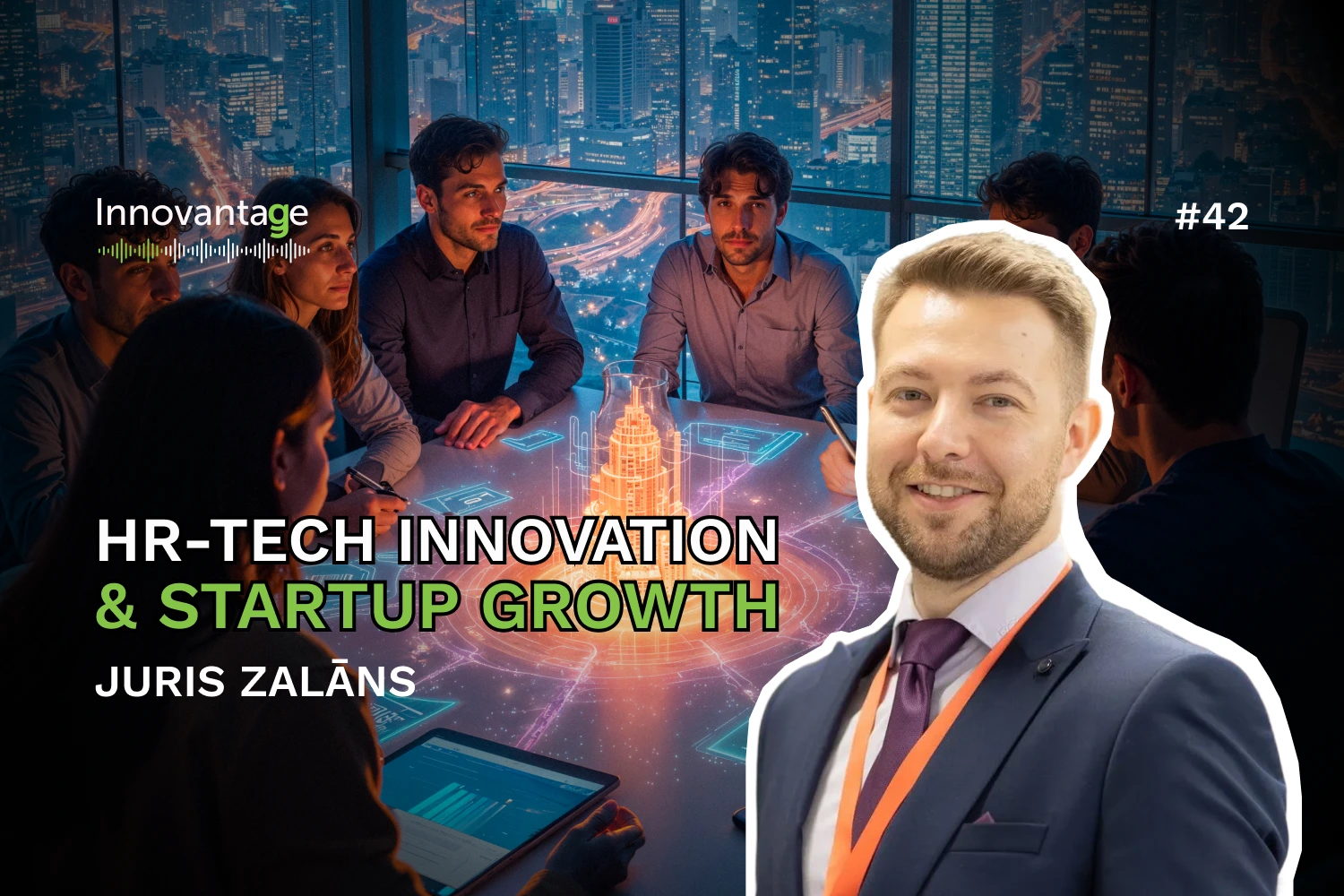
HR-tech en AI: hoe digitale tools hiring veranderen
March 23, 2026
11 min leestijd

Juris Zalāns van Talenme deelt hoe referrals, passief talent en AI recruitment en de toekomst van hiring veranderen.

Today, 70% of the workforce is not actively looking for a new job. Due to this, posting an ad and hoping for the best doesn’t work anymore.Does it mean that hiring is fully broken? This episode of the Innovantage podcast offers a solution. Its host and Sigli’s CBDO, Max Golikov, sat down with Juris Zalāns, co-founder of Talenme, to speak about the ongoing changes in the recruitment and HR space.In this conversation, Juris explained how digital tools are reshaping this sphere and why human trust is still the most powerful algorithm of all.Juris’s entrepreneurial journey began in the corporate world. At the beginning of his path, he held senior roles in procurement, logistics, and resource planning. He had a stable career, but he wanted to create solutions beyond the limits of traditional corporate responsibilities. He started contributing to initiatives outside his formal role and was looking for ways to deliver additional value within the organization.This initiative eventually led to his first startup. He introduced a contract-based discount system for employees. It happened more than a decade ago. But his solution resembled models that are only now gaining traction in the Baltic region.How Talenme helps businesses find employeesNow, Juris and his team are building Talenme. It is a referral-driven hiring engine designed to transform how companies find talent. Instead of relying only on traditional recruitment agencies or headhunters, the platform enables businesses to tap into broader human networks to identify suitable candidates.The concept is quite simple. Companies publish open roles along with a referral bonus. As a result, anyone can recommend qualified candidates. In this model, individuals become active contributors to the hiring process. They help organizations discover talent through trusted connections instead of cold outreach. If someone knows a strong candidate for a role, they can recommend them and receive a reward once the hire is successful.This approach aims to democratize headhunting and turn recruitment into a marketplace.Additionally, the model allows recruitment agencies and professionals to reuse their existing candidate pipelines more efficiently. Candidates who may not fit one role can still be matched with other opportunities within the ecosystem. This makes the hiring process more dynamic and cost-effective.What makes Talenme stand out?A key differentiator of Talenme is the crowd effect. The offered hiring approach is built around the reality that most talent is not actively searching for jobs. Today, only a small portion of the market actively applies for open roles. As a result, companies often compete for the same limited pool of candidates on traditional platforms.Talenme addresses this gap by focusing on access to passive talent through human networks. The model leverages personal connections as the primary channel to reach qualified specialists who may otherwise remain inaccessible. With its incentives for referrals, Talenme improves reach and significantly reduces sourcing limitations.Behind the scenes: Lean team, constant iterationTalenme is a compact, highly focused team. It consists of the co-founders and a CTO. Product development, sales, and marketing teams are freelancers who work part-time. This lean setup allows flexibility. But it demands significant multitasking and continuous prioritization.Operating with limited resources means balancing multiple responsibilities (client communication, bug fixing, financial management, and strategic planning) simultaneously. Due to this, startup execution often feels like constant grinding, with late nights and ongoing problem-solving becoming part of the daily routine.Another key challenge is aligning the product with real market needs. Initial ideas about features and client expectations often evolve when the product meets real users. It is crucial to listen to customers instead of relying on assumptions.Rethinking work-life balance in startupsJuris believes that the idea of traditional work-life balance in the startup world is largely a myth. Instead of balance, founders operate in a constant state of shifting priorities, where the most urgent tasks demand immediate attention. To build a startup, you need to keep a sustained focus. Apart from this, you should be ready to accept trade-offs rather than expect a perfectly structured routine.Startup life inevitably influences personal relationships, social time, and overall lifestyle. High responsibility and ongoing decision-making often blur the boundaries between professional and personal spheres.Key achievements in the first yearDuring its first year, Talenme reached several milestones that demonstrate early market validation and steady progress. One notable achievement was generating over $20,000 in revenue within the same year the product was pre-launched. It is a very significant step for an early-stage startup, especially given how challenging it is to secure initial traction and paying customers.The team also succeeded in attracting strong market interest. Major retail chains and well-known IT companies began testing the platform through pilot programs.Early feedback has been particularly positive from organizations that previously relied on internal referral programs and are now exploring how to scale them externally.In addition to this, maintaining team cohesion has been an important internal achievement. Despite the high workload and limited time, the team has preserved a collaborative and supportive culture.Smart communication in small teamsIn a small startup team, effective communication is less about sharing everything and more about sharing what truly matters. It makes no sense to overwhelm team members with constant updates. The focus should be on providing the information they need to perform their roles efficiently. Overcommunication can create noise and distract from execution.For example, high-level updates about fundraising or long-term strategy may be shared as context. At the same time, detailed discussions should center on areas where the team can actively contribute (for example, product development or feature decisions).However, transparency remains essential from the very beginning. Setting clear expectations helps align the team and attract people who genuinely believe in the vision. In early-stage startups, motivation is often driven by the opportunity to build something meaningful. Meanwhile, financial incentives are less important.Talent acquisition trends in 2026One of the defining trends in talent acquisition is the growing dominance of passive candidates. Unemployment rates are historically low across Europe. The majority of qualified professionals are already employed. Organizations need to rethink their recruitment strategies. They can’t rely only on inbound applications. Businesses must focus on engagement and employer branding to attract and retain talent. Employee-centric approaches (increasing workplace satisfaction, maintaining strong internal culture, etc.) are becoming key competitive advantages.Another trend is the growing reliance on external hiring channels. Many companies are outsourcing HR processes to recruitment agencies or headhunters. At the same time, gig work and flexible talent models continue to expand. This enables businesses to scale faster without fully increasing headcount.Financial pressure also impacts hiring decisions. Rising salaries and slower wage growth stabilization mean startups and smaller companies must be more resourceful when they are competing with large corporations for skilled professionals.Role of AI in hiring: Support tool, not a decision makerThe popularity of AI in talent acquisition is growing. But its role remains complex and often misunderstood. Automated screening tools and AI-powered applicant tracking systems promise faster candidate evaluation. However, real-world cases show that overreliance on automation can lead to flawed outcomes. Quite often, qualified candidates are automatically rejected due to rigid filtering criteria.At the same time, both candidates and recruiters are now using AI in parallel. Applicants generate AI-enhanced resumes, while HR teams rely on AI-assisted scoring and shortlisting. This creates a loop where automation influences both sides of the hiring process and raises concerns about transparency and decision accuracy.Juris explained that AI works best as a support feature rather than a replacement for human judgment. It can help structure data, speed up candidate scoring, and improve efficiency. However, blindly following AI recommendations can reduce hiring quality, especially in nuanced roles where context and interpersonal fit matter.Regulatory uncertainty, including emerging AI legislation, is also making corporations more cautious about full-scale automation in HR processes. As a result, many organizations are adopting a hybrid approach. They try to combine AI-driven insights with human validation.Referral-driven hiring models highlight the continued importance of human interaction. Personal context and reputation signals often provide stronger candidate validation than algorithmic filtering alone.Future of AI in talent matchmakingWhile organizations increasingly rely on AI for screening and data analysis, trust in automated decisions still has clear limits. Recruiters and hiring managers tend to treat AI outputs as guidance (not absolute truth), especially in high-stakes hiring decisions.According to Juris, in the future, AI is likely to evolve into intelligent matchmaking. Instead of only filtering resumes, it may help identify strong candidate-role connections by analyzing skills and network relevance. For example, platforms could allow users to connect their professional networks and receive notifications when suitable roles match the profiles of people they know. This would transform recruitment into a more proactive process.However, even with advanced AI capabilities, the human element will remain essential. A recommendation from a trusted contact carries social proof and additional insight into candidate fit that automated systems often miss.Referrals vs. cold applications: Who gets reviewed first?When it comes to reviewing CVs, referrals often get priority over cold applications. This approach is not about favoritism, but efficiency. Referrals signal trust and reduce uncertainty. This allows hiring managers to focus their energy on the most promising candidates.However, this system can pose challenges for those who are just starting their careers. Early-career candidates should concentrate on learning and demonstrating potential. It’s also vital to recognize that building a reputation and network takes time.When it comes to recruitment in startups, referrals are highly effective for hard-to-fill mid- and senior-level roles, particularly in IT, fintech, and sales. But giants also rely on recommendations as well.Data from 2024 shows that companies like Accenture hire roughly one in three employees through internal referrals.However, for junior or high-volume positions like internships, referrals play a different role. They can accelerate hiring when speed matters. But they are less critical since candidates are more accessible through traditional channels.Juris emphasized that resumes are rarely the deciding factor.In his experience, hiring decisions are guided more by attitude and self-motivation than by formal degrees or prior titles. The ideal candidate is eager to learn and capable of taking initiative without constant supervision. For startups, assembling a team of motivated learners can have a huge impact on future growth. Rise of project-based careersAs studies show, younger generations move through more jobs over their careers. According to a recent survey, Gen Z workers are expected to change jobs 20-30 times, compared to 10-12 times for millennials. It is still not fully a gig economy since many professional roles require onboarding and company-specific knowledge. However, this trend points toward a project economy. It means that employees work on discrete assignments within organizations before moving on to the next project. Platforms like Fiverr demonstrate the growing popularity of short-term, skill-based work. In this environment, hiring solutions that accelerate the path from job posting to onboarding are crucial. The most effective recruitment approaches will be those that quickly connect companies with the right talent.Evaluation of career experienceHiring decisions often come down to the trade-off between breadth and depth of experience. For example, imagine that you consider two engineers. One of them has a long-term journey at a single company. This specialist has gained deep expertise in a specific product or enterprise. The other has multiple short-term project experiences across several companies. Thanks to this, this engineer has managed to accumulate diverse skills and exposure to different industries and workflows.The optimal choice depends on the organization’s current needs. If the goal is rapidly scaling knowledge across new domains, a candidate with multiple project experiences may be a good choice. This specialist can bring fresh insights and accelerate learning within the team. On the other hand, if the priority is leveraging existing expertise for execution and specialization, a candidate with long-term experience may deliver more consistent results.Why salary isn’t the top priority for Gen ZFor Gen Z, career choices are increasingly driven by lifestyle alignment and work-life balance rather than purely financial incentives. Unlike previous generations, many young professionals in Europe face less financial pressure. Very often, they are able to rely on family support while pursuing early career opportunities. As a result, their priorities shift toward roles that offer meaningful work and allow them to maintain a healthy work-life balance.This trend challenges companies to reconsider traditional compensation-focused recruitment strategies. High salaries alone are no longer sufficient to attract or retain talent. Employers must also foster flexible work environments that prioritize employee well-being and personal growth.Future of HR tech: AI and human interactionSpeaking about the future of HR technology, Juris highlighted the growing role of the combination of AI-driven analytics and human-centered interactions. AI is expected to become an essential tool in HR processes, from talent sourcing to workflow optimization. Its power in data analysis and pattern recognition can help HR teams make faster, more informed decisions.However, AI can’t replace the human elements critical to recruitment and workforce management. Skills like reading interpersonal cues, detecting honesty or motivation, and building relationships remain inherently human. Missteps with fully automated interactions (such as AI-generated calls or outreach) can seriously frustrate candidates.Regional regulations also shape the adoption of HR tech. Centralized systems like blockchain-based CVs could simplify hiring across borders. However, varying legal frameworks in different countries require human judgment to ensure compliance.Why technology in HR is long overdueHR has historically lagged behind other business functions in adopting technology. Marketing, logistics, and production have been fully digitalized. But HR still relies heavily on manual processes for recruitment and talent development.In such conditions, despite being the most human function, HR is in the most need of tech support. Digital solutions can cover data analytics, candidate matchmaking, operational automation, and many other tasks. This can allow HR professionals to focus on human-centered work.The right balance between digitalization and human participation remains key to increased efficiency across every function. And HR is not an exception here.If you want to learn more about the role of modern technologies in business and our everyday life, stay tuned! The next episodes of the Innovantage podcast will offer new insights and perspectives on these aspects from industry experts and tech leaders.
AI-ontwikkeling
Wanneer AI niet het juiste antwoord is: wat bedrijven eerst moeten oplossen
March 10, 2026
9 min leestijd

Is uw AI-strategie gebouwd op los zand? Ontdek waarom Sigli CEO’s adviseert om eerst te vertragen en vier fundamentele pijlers te prioriteren — datakwaliteit, procesvolwassenheid en infrastructuur — vóór zij gaan automatiseren. Lees hoe u “geautomatiseerde chaos” kunt omzetten in schaalbare ROI.

In the current landscape, the pressure on leadership to "do something with AI" is immense. Boardrooms and shareholders are increasingly viewing AI as a universal solvent for operational friction. However, at Sigli, we have observed a recurring pattern: when AI is treated as a shortcut to bypass organizational inefficiencies, it fails. Worse, it scales those inefficiencies at a digital pace.For a software development company focused on data and AI, our most critical advice to partners is often to pause. AI is a powerful multiplier, but it is mathematically indifferent to what it multiplies. If you apply it to a fractured foundation, you simply achieve automated chaos. To ensure a return on investment, CEOs and COOs must prioritize four foundational pillars before flipping the switch on automation.The Integrity of the Mirror: Data as a Strategic AssetThe primary risk for any executive-led AI initiative is "Model Hallucination," but the root cause is rarely the algorithm, it is the data. AI does not possess human intuition; it is a mirror that reflects the environment described by your data. If your departments operate in silos, where Marketing’s "Customer Acquisition Cost" differs from Finance’s "Marketing Expense," the AI cannot reconcile the truth. It will simply provide a confident, sophisticated answer based on a flawed premise.Strategic data integrity requires moving beyond simple storage and into the realm of Active Data Governance. This is not a clerical task; it is a leadership mandate to establish a "Universal Source of Truth." Before investing in predictive models, the organization must ensure data is cleaned, centralized, and standardized. At Sigli, we often find that the deployment of a high-performance data warehouse, making the actual state of the business visible for the first time, yields a more immediate and measurable ROI than the most advanced neural network could provide on a shaky foundation.Mapping the Logic: Why You Cannot Automate Tribal KnowledgeAI thrives on repeatable, deterministic logic. Yet, many of the world’s most successful companies still run on "tribal knowledge", critical operational logic that exists only in the heads of veteran employees. If a process requires a human to "just know" when to bypass a rule or how to fix an error, that process is not ready for an AI agent.Automation requires a level of Process Maturity where every workflow can be mapped as a logical flowchart. If your COOs cannot document a process to the point where a junior employee could execute it with 100% accuracy, an AI will fail to replicate it. Leadership must first audit these "Human Glue" moments where manual intervention keeps the gears turning. By streamlining and standardizing these workflows today, you aren't just improving manual efficiency; you are creating the behavioral blueprint that will eventually allow AI to scale your operations.Strategic Solvability: Guarding Against Technological FOMOThe "Fear of Missing Out" is perhaps the most expensive driver of modern technical debt. We frequently see organizations rush into Generative AI pilots because of industry noise, rather than a diagnosed bottleneck. This leads to "Pilot Purgatory," where projects consume resources but never reach production because they were never tied to a core business challenge.A value-driven roadmap requires the discipline to ask if a problem is AI-shaped. AI is uniquely gifted at three things: massive scale, extreme speed, and high-dimensional pattern recognition. If a business challenge, such as a high support ticket volume or a complex supply chain—does not fall into those categories, it may be better solved with a simple script, a better UI, or a management change. Sigli’s approach is to identify the "Hard Problems" first. By ensuring every technical dollar is tied to a Top-3 KPI, you ensure that AI is a strategic asset rather than an expensive science experiment.Infrastructure Modernization: The Engine Room of InnovationThe final hurdle for the CEO is the "Legacy Tax." Modern AI requires high-speed data portability and cloud-native environments. Trying to integrate a cutting-edge LLM into a twenty-year-old on-premise server is an exercise in futility. The integration costs alone often exceed the value the AI provides.Legacy systems typically lack the API-first architecture necessary for modern software to communicate. This forces your engineering teams to build "brittle bridges", custom code that breaks every time the model or the system updates. True digital transformation is about building an Extensible Architecture. By modernizing the core tech stack and moving toward a modular, cloud-based environment, you grant your organization the agility to swap in new AI models as the technology evolves. You aren't just buying software; you are buying the ability to pivot.The most successful AI implementations we have led didn't start with a model; they started with a cleanup. By fixing the "boring" fundamentals, data quality, process clarity, and system architecture, you aren't delaying your AI future. You are ensuring that when you finally deploy it, the results are predictable, scalable, and profitable.Don't build your digital future on sand. Build a foundation that makes AI's success a mathematical certainty.
Bedrijfsstrategie & Groei
Van tweedehands naar succes: praktische tips voor founders van Thijs Verheul
March 9, 2026
10 min leestijd

Een startup bouwen is zwaar. Fouten kunnen duur zijn. Maar dat betekent niet dat deze reis het niet waard is om te beginnen.

In this episode of the Innovantage podcast, its host and Sigli’s CBDO, Max Golikov, speaks with Thijs Verheul, co-founder of United Wardrobe, the fashion marketplace acquired by Vinted. In their conversation, Thijs, who is now an angel investor and author of Thrift to Triumph, shares his insights and lessons learned on execution. How to build the right team? How to manage burnout? How to make tough decisions? Find answers in our article!How everything startedThijs’s entrepreneurial journey did not start with a clear plan. At 18, he briefly studied law before realizing it was not for him. After quitting, he spent six months working as a ski instructor in Austria. At 19, he decided to return to university and enrolled at Wageningen University in the Netherlands, known for its focus on life sciences and environmental innovation. It was there, in 2013, that he met his future co-founder, Sjuul Berden.Sjuul proposed the idea of a dedicated marketplace for second-hand clothing, inspired by his sisters’ overflowing wardrobes. At the time, Thijs was skeptical. There were already a lot of marketplaces and Facebook groups where people could buy and sell different items. The idea of a clothing-only marketplace seemed unnecessary. Meanwhile, Vinted was still a small, little-known startup.After months of discussion, Sjuul convinced him. In January 2014, they launched United Wardrobe. Over time, the company raised €3.5 million in venture capital, grew to 60 full-time employees, reached 4.5 million users, and facilitated around €40 million in annual GMV.In 2020, United Wardrobe was acquired by its largest competitor, Vinted. Thijs became a Vinted shareholder and chose to step away. Today, Thijs is a new father and an active angel investor. Turning ideas into real actionAs Thijs highlighted, execution starts with the right team. In his experience, the most important factor is assembling people with complementary skills.He described the ideal founding team as a combination of a hippie, a hacker, and a hustler. The hippie brings the vision and long-term purpose. The hacker builds the product. And the hustler drives the business forward through sales and partnerships. At United Wardrobe, Thijs played the role of the hustler, while his co-founder, Sjuul, was the visionary. Together with an engineer, they formed the core team that could get the company off the ground.Apart from this, the willingness to launch early also plays an important role. The first version of United Wardrobe was far from perfect. But it worked where it mattered. Users could register, and payments functioned. That was enough. By putting the product live quickly, the team could gather real user feedback, analyze data, and improve the platform step by step.Importance of people: Why solo founders rarely winAs an angel investor, Thijs is cautious when it comes to solo founders. Even when a single entrepreneur shows strong early traction (such as €50,000 in monthly recurring revenue), there is still a significant risk. Building a company alone often leads to burnout. Without another founder, there is no equal partner to share responsibility or challenge decisions.Solo founders can hire teams later. But this is not the same as having multiple founders with true ownership and entrepreneurial accountability. Shared ownership creates resilience and faster problem-solving during difficult phases.Nevertheless, exceptions exist. Solo builders will continue to create successful companies, especially in the age of AI. However, from an investor’s perspective, the odds are simply better with a founding team.This belief also shapes Thijs’s own work today. On his current projects, progress depends heavily on the people around him. Teams create motivation and a shared drive to perform. Moreover, working together is more enjoyable and sustainable.First real win: How Facebook groups unlocked growthBefore launching United Wardrobe, the founders focused on building an audience. At that time, Facebook was the dominant social platform. They created a Facebook page and invited their entire network to follow along.They shared early designs, product ideas, and feature concepts. This helped them receive hundreds of comments from potential users. This feedback directly shaped the platform. When United Wardrobe launched, it attracted 500 registered users on day one, without any marketing spend. However, growth stalled shortly after. Two to three weeks later, activity on the platform dropped sharply. The breakthrough came when the team identified two large Facebook groups dedicated to buying and selling second-hand clothing. Through negotiation, they acquired one group and gained permission to promote United Wardrobe in the other.They automatically shared listings from United Wardrobe into these groups. The impact was immediate. The group members were already actively trading clothes, but struggled with scams and unreliable transactions. United Wardrobe offered a safer alternative. It held payments until items were delivered.After that, the platform reached its first real liquidity with 10,000 products and 100,000 users. As a result, Facebook communities became the foundation for scaling the business.Biggest early mistake: Scaling too fastOne of the lowest points in building United Wardrobe came after the company’s third funding round. The team had raised €250,000, followed by €1 million, and then €1.5 million. With fresh capital in hand, they began hiring aggressively.At its peak, the company employed around 60 full-time staff. Nearly 30 people were dedicated to entering the French market. At the time, France seemed promising. However, Vinted already dominated the market.Within six months, the reality became clear. Competing in France would require an entirely different scale. Investors advised the team to reconsider and focus elsewhere.To protect the company’s runway and avoid bankruptcy, United Wardrobe made the painful decision to let go of 30 employees in a single day. For several months, the founders had tried to cut costs and regain momentum. But eventually they withdrew from France and refocused on their core markets in the Netherlands and Belgium.Looking back, Thijs describes the mistake as a combination of youth and inexperience. The team believed hiring more people would automatically drive growth. They underestimated the operational overhead of managing a large team and the emotional toll of scaling too quickly. Major milestones and brutal pressure from VintedThe eventual acquisition by Vinted was the defining milestone of United Wardrobe’s journey. From the first bid to the final deal in October 2020, the process took nearly two years.By that point, Vinted had already become a dominant force across Europe. Both United Wardrobe and Vinted started from a remarkably similar idea. But Vinted scaled faster and raised significantly more capital. Vinted’s aggressive expansion strategy reshaped entire markets. Dozens of local second-hand platforms across Europe disappeared once Vinted entered their regions.The pressure became especially intense in 2018, when Vinted entered the Dutch market. With a TV advertising budget of around €1.5 million, Vinted dwarfed United Wardrobe’s €50,000 marketing budget. United Wardrobe relied on social media, influencers, and strong SEO positioning. The company attracted a younger audience and maintained its position as the top Google result for clothing resale in the Netherlands. But it became clear that only one player would ultimately dominate the market.The deal with Vinted was agreed upon in March 2020, only to be delayed for six months when COVID-19 hit Europe. Ultimately, the acquisition went through.Initially, Thijs and his co-founders preferred a clean cash exit rather than shares in Vinted. However, Vinted’s CEO convinced them to retain equity. Now, Thijs believes that it is one of the best financial choices he ever made. Since then, Vinted’s valuation has grown significantly.What happened after the acquisitionAfter the acquisition, Thijs stayed on for approximately four months to support the transition. During this period, United Wardrobe’s 4.5 million users were migrated to the Vinted platform. Now, he remains a minor shareholder in Vinted but holds no board role or operational influence. Since then, he has returned to the startup world as an angel investor, working with early-stage companies at a more sustainable pace. After the exit of United Wardrobe, Thijs felt a strong need to document the journey. The years of building the company had been intense and emotionally exhausting, and much of it felt like a blur. He began writing as a personal exercise to create a record he could reflect on.The idea of turning those notes into a book came after a conversation with a friend. She encouraged him to share the story more widely.Publicly, United Wardrobe was often portrayed as a straightforward success story. Behind the scenes, however, the company came close to bankruptcy multiple times, and Thijs nearly quit on several occasions. He felt it was important to challenge the simplified narrative of overnight success and highlight the reality.The book called Thrift to Triumph also aims to demystify the acquisition process. Media headlines often make exits seem quick and effortless, when in reality they can take years of negotiations and uncertainty. By sharing the full story, Thijs wanted to give young entrepreneurs a realistic view of what the journey entails. Today, this digital book is available for free.One piece of advice for readersIf there is one core lesson Thijs hopes readers take from his book, it is the importance of people. The story of United Wardrobe makes clear that no matter how powerful AI or technology becomes, building a company still requires real humans working together on the ground.He encourages founders to find strong team members early and to work together in person whenever possible. Shared physical spaces create trust and emotional understanding that tools like Slack simply cannot replace. Building a startup is demanding. But it can also be an enjoyable journey when experienced as a team.The book also provides a closer look at the personal cost of entrepreneurship. Thijs described constant stress, repeated near-burnouts, and the pressure of feeling that failure was not an option. Thijs hopes that readers can learn from the decisions he would not repeat. Life as an angel investorAfter selling United Wardrobe, Thijs noticed a huge interest from entrepreneurs. Pitch decks poured in via email, LinkedIn, and Instagram. Thanks to this, he could cherry-pick startups he believed had potential. For Thijs, access to a wide deal flow is essential. Out of dozens of opportunities, only a few typically turn into worthwhile investments.Angel investing allows him to stay close to the startup world. He enjoys mentoring founders, offering advice on sales, marketing, and strategy, and witnessing teams pursue products that aim to make a real impact. At the same time, it is a challenging and sometimes slow process. Of his eight investments so far, three or four are performing well. The others face hurdles. The work involves careful analysis of valuations and equity structures. All this requires patience and attention to detail.Many startups take years to reach an exit, and returns often require long-term waiting. But the ability to support and guide young entrepreneurs keeps Thijs engaged.How Thijs chooses teams to invest inAccording to Thijs, the most important factor in early-stage investing is the entrepreneurs themselves. He looks for teams with complementary skills. But beyond that, he favors founders who have previous startup experience (especially those who have built and sold a company before). Such entrepreneurs combine lessons learned from past mistakes with the drive and financial freedom to commit fully to the long term.Personal connections and reputation also matter. Thijs often invests in teams that come through his network. He assesses growth metrics and looks for early traction as a signal that the startup is on the right path. His focus is on seed-stage investments (usually small tickets under €100K), where he can provide strategic guidance and help founders navigate early challenges.However, experience alone is not a strict requirement. Thijs also invests in first-time founders if the team is strong, the product is compelling, and the potential for impact is clear. One example is Eddy Grid, a company that builds software to optimize battery usage for factories. Although the founders came from traditional industries, they brought complementary skills and deep industry knowledge.Nevertheless, Thijs emphasized that there is no single formula for success in startup investing.Decisions are made by balancing data and intuition. At the same time, mistakes are inevitable. What matters is that one strong outcome can more than compensate for several failed investments.Breeze and marketplace mechanics in datingThijs also invested in Breeze, a dating app founded by seven students with highly complementary skills (developers, designers, and marketers). Initially, the team generated only a few thousand euros per month. But it managed to catch the attention of prominent Dutch angel investors. Thijs joined to help with marketing and quickly became impressed by their energy and vision.He noticed parallels between dating apps and marketplaces like United Wardrobe. Just as a clothing marketplace needs a large inventory to match buyers with the right products, a dating app requires a critical mass of users to facilitate meaningful connections.Breeze introduced a unique approach. Matches could not chat directly but instead booked dates via an integrated date-picker system. The approach proved highly successful. Thijs noted that multiple marriages and even children have resulted from connections made on the app.Breeze’s business model contrasts with platforms like Tinder or Bumble, which benefit from keeping users single and engaged for as long as possible. Breeze, instead, succeeds when users find partners quickly and leave the app. This makes its incentives aligned with user success rather than retention.The app’s growth has been rapid, particularly in the US and the UK. The app partners with local restaurants and cafes, integrating their reservation systems to facilitate dates. New York, London, Birmingham, and Newcastle are its key focus areas.Thijs also highlighted an important marketing insight: women are far more expensive to acquire than men. For Instagram ads, female installs cost roughly €25 each, while male installs cost only about €0.10. Understanding these dynamics is crucial for balancing user acquisition and maintaining a healthy dating marketplace.Possible failures in angel investmentsOf course, startup investing is high-risk, but high-reward. In his experience as an angel investor, Thijs has seen a mix of outcomes. A few early investments have yielded small profits. But the true success of most seed-stage startups may only become clear over 10 years or more.Some investments have underperformed. In one case, Thijs and his co-investors put significant capital into a startup, only for a later venture capital round to bring in a more aggressive investor. While the outcome was still positive, the communication and process could have been handled better. This illustrates one of the challenges of early-stage investing. In another instance, a startup continues to operate after two years of hard work without reaching its intended goals. These experiences show that even with dedication, products may fail to gain traction, and founders must decide when to pivot.As Thijs explained, angel investing should be done only with money one can afford to lose. Compared with more traditional investments, like stocks, ETFs, or real estate, startups are riskier. They have the potential to go either times 50 or to zero. Success comes from portfolio thinking. Investing in many startups increases the chance that one will achieve exponential returns, effectively compensating for the others.Advice for young startup foundersThijs strongly believes that founders should surround themselves with people whose skills balance their own. Once the team is in place, the key is to start quickly and iterate constantly. Launch early, test the product with friends and family, analyze data every day, and improve continuously. Marketing should be bold. Try to engage users directly and use minimal resources to gain traction. That’s what Thijs advised.Apart from this, Thijs highlighted the importance of self-care and balance for startup founders. He recommended working in focused bursts instead of long, exhausting hours. You should take breaks to walk or relax.Moreover, working with people who energize and inspire you is critical to sustaining performance and maintaining motivation over the long term.Such tips may seem quite simple. But they help build a strong foundation for further resilience and growth.Looking to learn more from startup stories and business insights in the digital age? Stay tuned for the next episodes of the Innovantage podcast.
Sigli Nieuws
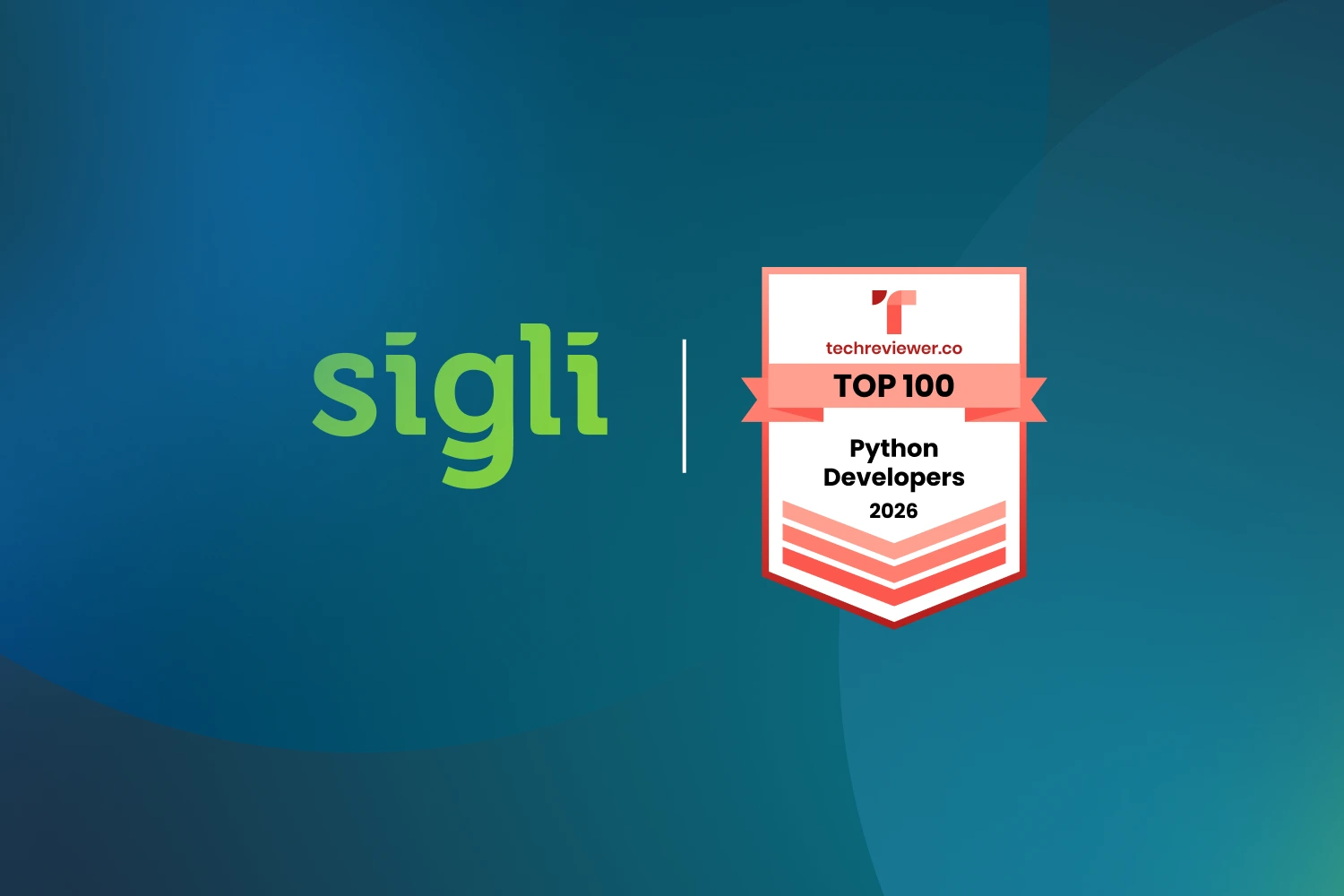
Sigli door Techreviewer.co gerangschikt in de Top 100 van Python-ontwikkelaars voor 2026
March 6, 2026
3 min leestijd

Sigli is in 2026 opgenomen in Techreviewer.co’s Top 100 Python Developers, als erkenning voor onze expertise in schaalbare, datagedreven softwareoplossingen.

We at Sigli are proud to announce that we have been ranked among the Top 100 Python Developers on the Techreviewer list for 2026. This recognition reflects our long-term focus on building robust, data-driven software solutions and our commitment to using Python as a core technology for creating scalable, reliable, and insight-driven digital products. Being included in this global ranking highlights both the technical depth of our teams and the real-world impact our solutions deliver for clients operating in complex data environments.A Strong Foundation in Python and Data-Driven EngineeringFrom the beginning, Sigli has been built around the idea that high-quality software starts with a deep understanding of data and the systems that generate it. Python plays a central role in this approach. Its flexibility, clarity, and extensive ecosystem allow us to design solutions that are both technically sound and adaptable to evolving business needs.We use Python to power backend systems, data processing pipelines, analytics platforms, and custom applications where performance and accuracy are critical. Our teams apply Python in environments that demand reliability at scale, ensuring that systems are maintainable, secure, and capable of growing alongside the organizations that rely on them.Delivering Data-Driven Solutions with Measurable ValueOur work in data-driven solutions is a defining part of who we are. We help organizations transform raw data into actionable insights by designing and developing systems that support data collection, processing, analysis, and visualization. Python enables us to connect these layers seamlessly, creating platforms where data flows efficiently and insights are accessible to decision-makers.We collaborate closely with clients to understand how data is generated, where bottlenecks exist, and how insights can be embedded directly into workflows. By aligning Python development with business objectives, we ensure that technology investments result in tangible outcomes such as improved efficiency, better forecasting, and more informed strategic decisions.How We Work: Structured, Collaborative, and Insight-FocusedSigli’s approach to software development is rooted in collaboration and clarity. Every engagement begins with a deep discovery phase, where we work alongside stakeholders to define goals, assess data readiness, and identify technical and organizational constraints. This foundation allows us to design Python-based solutions that are aligned with both short-term needs and long-term strategy.Throughout development, we emphasize transparency, iterative delivery, and continuous validation. Our teams follow best practices in code quality, testing, and documentation to ensure that solutions are not only effective at launch, but sustainable over time. This structured yet flexible way of working enables us to adapt to change without compromising stability or performance.Python Expertise Across Complex Use CasesOur Python capabilities support a wide range of use cases, particularly in environments where data volume, complexity, and accuracy are critical. These include backend services, data analytics platforms, integration layers, and automation systems that streamline operations and enhance visibility.Key areas of our Python development expertise include:Backend systems and APIs designed for scalability and performance.Data processing and analytics pipelines supporting business intelligence.Integration of multiple data sources into unified platforms.Automation tools that reduce manual effort and improve reliability.Maintainable architectures that support long-term evolution.This breadth of experience allows us to tailor Python solutions to each client’s specific context while maintaining high engineering standards.Why This Recognition Matters to SigliBeing ranked among the Top 100 Python Developers in 2026 is a meaningful achievement for Sigli. It reflects the consistency of our work, the expertise of our teams, and the trust our clients place in us to deliver complex, data-centric systems. This recognition also highlights the importance of our focus on combining Python development with a strong understanding of data strategy and system design.For our clients, this ranking offers additional confidence that they are partnering with a team recognized for technical excellence and thoughtful execution. For our internal teams, it serves as motivation to continue refining our skills, embracing innovation, and maintaining the high standards that define our work.About Techreviewer.coTechreviewer.co is an independent research and analytics platform that evaluates technology service providers worldwide. Its rankings are based on criteria such as technical expertise, project experience, service quality, client feedback, and market presence. The Top 100 Python Developers list helps organizations identify trusted partners for Python-based software development and data-centric digital initiatives.
User Training Services Benelux
Bedrijfsstrategie & Groei
Voorbij de Rondleiding: Een Strategisch Kader voor Gebruikerstrainingen
March 4, 2026
5 min leestijd

Bij de uitrol van nieuwe software focussen User Training Services op rolgebaseerde adoptie, niet alleen op een rondleiding door het systeem. Zo verminder je het aantal tickets en zorg je voor productiviteit vanaf dag één.

Most digital transformation projects falter at the final hurdle: the human element. Traditional end-user training often fails because it treats software as a destination rather than a tool. To drive genuine adoption, training must shift from "system tours" to workday enablement plans.In the competitive landscape of User Training Services Benelux, success isn't measured by the number of sessions delivered, but by the speed of operational autonomy on Day 1.Role-Based Architecture: Engineering for Operational RealityGeneric software demonstrations are high-effort and low-retention. Effective User Training Services in the Benelux region require a move away from the "one-size-fits-all" demo toward a role-based design that mirrors the functional reality of an organization.Mapping Functional PersonasEffective training begins by mapping operational roles rather than hierarchical titles. In the Benelux market, characterized by multilingual teams and cross-border collaboration, a "Sales Representative" in Amsterdam may have different data compliance requirements or localized workflows than one in Brussels.Key personas to map include:Frontline Operators: (e.g., Sales Reps, Customer Support) focusing on high-frequency data entry.Decision Makers: (e.g., Finance Approvers, Team Leads) focusing on validation and reporting.System Guardians: (e.g., Admins, Power Users) focusing on configuration and troubleshooting.Task-to-Objective ConversionFor every persona, identify the 5–15 mission-critical tasks performed weekly. Instead of "navigating the interface," the focus shifts to executable workflows:The Task: "Submit an expense report."The Objective: "Complete a multi-currency submission in under 3 minutes with zero validation errors."The Result: A drastic reduction in support desk tickets and "rework" cycles.The Localization Factor: Navigating the Benelux LandscapeProviding User Training Services Benelux wide involves more than just translating slides. It requires an understanding of regional nuances in work culture and language.Multilingual Synchronization: Training must be accessible in Dutch, French, and English, ensuring that technical terminology remains consistent across the entire workforce.Regional Compliance: Incorporating local tax laws, GDPR nuances, or specific regional business logic directly into the training flow prevents users from falling back on "shadow" manual processes.The Digital Asset Ecosystem: Reinforcement Beyond the ClassroomA live session is a catalyst, but long-term adoption requires a reusable ecosystem of assets. Professional User Training Services Benelux providers deliver a "Learning Library" designed for continuous onboarding.High-Impact Job Aids (The "Monday Morning" Docs)Users rarely re-watch a 60-minute recording to solve a 30-second problem. The most effective training packages include:Step-by-Step Job Aids: 1–2 page visual guides focusing on "the steps, the fields, and the gotchas."Quick Reference Guides (QRGs): "Top 10 Actions" or "Troubleshooting 101" sheets that act as a safety net during the high-stress go-live week.The Micro-Learning Video StrategyIn a modern digital workplace, videos should be task-based and "snackable" (2–5 minutes).Focus on Friction: Create videos specifically for the tasks that historically generate the most support tickets.Localization Efficiency: By using task-based videos, Benelux organizations can easily swap audio tracks or subtitles to serve different regions without re-shooting the entire technical demonstration.The transition from a "system tour" to an "adoption-led" strategy is what defines premium User Training Services Benelux. By focusing on role-based mapping and a robust asset ecosystem, organizations ensure that their teams aren't just "using the system", they are mastering it.
Business app creation without coding Benelux
Web Development
De #1 Reden Waarom "No-Code" Projecten Stagneren: Waarom Integratie de Sleutel is tot het Maken van Zakelijke Apps Zonder Te Coderen (Benelux)
March 3, 2026
5 min leestijd

Ontdek waarom het ontwikkelen van businessapps zonder te coderen in de Benelux vaak vastloopt in de integratiefase, en wat het 5-stappenplan is om obstakels rond ERP, data en compliance te omzeilen.

Low-code and no-code platforms promise a revolution: business app creation without coding. In the Benelux region, where companies are rapidly digitizing via the Microsoft Power Platform and Mendix, the "quick win" is more popular than ever. It feels easy until the app needs to touch real business systems.In the Benelux market, organizations operate on dense Microsoft ecosystems, legacy ERPs, and strict compliance frameworks. This is where the "speed promise" often breaks. The real complexity isn't the UI; it’s the integration, data quality, and governance.The Illusion: "From Idea to App in Two Weeks"Most projects for business app creation without coding in Benelux start with a simple prototype:HR onboarding forms or procurement request flows.Operations dashboards with manual input fields.But business apps cannot stay in a vacuum. Soon, stakeholders ask:"Can it sync with our SAP or Dynamics 365 ERP?""Can we restrict access by region (NL vs. BE) or entity?""Does it meet local GDPR audit requirements?"What Actually Slows Down No-Code Apps?1. Integration Reality GapsStandard connectors often get you 80% of the way. The final 20% handling rate limits, inconsistent API behaviors, or unsupported legacy actions is where projects stall.2. The Data Ownership CrisisNo-code tools expose data issues that have been hidden for years. If your master data is full of duplicates or missing identifiers, your "no-code" app becomes a mirror for those failures.3. The Compliance Bar in BeneluxIn the Benelux, "nice-to-haves" like SSO (Entra ID), role-based access, and detailed audit trails are mandatory. Skipping these during the build phase ensures a rejection from IT during the security review.The Playbook: Making "No-Code" Production-GradeTo succeed with business app creation without coding, you need an "integration-first" mindset.Step 1: The Data Reality CheckBefore designing a single screen, map your systems. Who owns the CRM data? Is the API stable? Do you need middleware? Identifying these risks early prevents 70% of common delays.Step 2: Build a Connected "Slice"Instead of 50 screens, build one core workflow that uses real data and real permissions. Validating the integration early proves the concept is actually viable in a production environment.Step 3: Standardize the Integration LayerDon't wire your apps directly to your ERP. Use an API gateway or shared services. This ensures that when your upstream systems change, you fix one layer not 25 different app workflows.Step 4: Lightweight GovernanceImplement "Minimum Viable Governance" from Day 1:Environment Strategy: Separate Dev, Test, and Prod.App Registry: Track who owns the app and what data it touches.Naming Conventions: Prevent "App_Final_v2" chaos.Choosing a Benelux Partner for No-Code DeliveryIf you are hiring a consultant for business app creation without coding in Benelux, look for these signals:Green FlagsRed FlagsThey ask about your ERP/API limits first.They focus only on how "pretty" the UI is.They have a plan for Entra ID/SSO.They suggest "workarounds" for security. They emphasize data ownership and "Source of Truth."They claim everything is "out of the box."They provide a Day 2 support and maintenance model.They vanish as soon as the app is "Live."No-code platforms are powerful tools for speed. However, the real value lies in making those apps secure, governed, and integrated. If you treat your app like a product rather than a prototype, you can achieve the dream of business app creation without coding in the Benelux without the typical enterprise headaches.
software development agency
Rapid PoC for tech product UK

suBscribe

to our blog

Subscribe
MVP consulting firm UK
Thank you, we'll send you a new post soon!
Oops! Something went wrong while submitting the form.